Every week we receive messages from people over 60 asking...
Read more



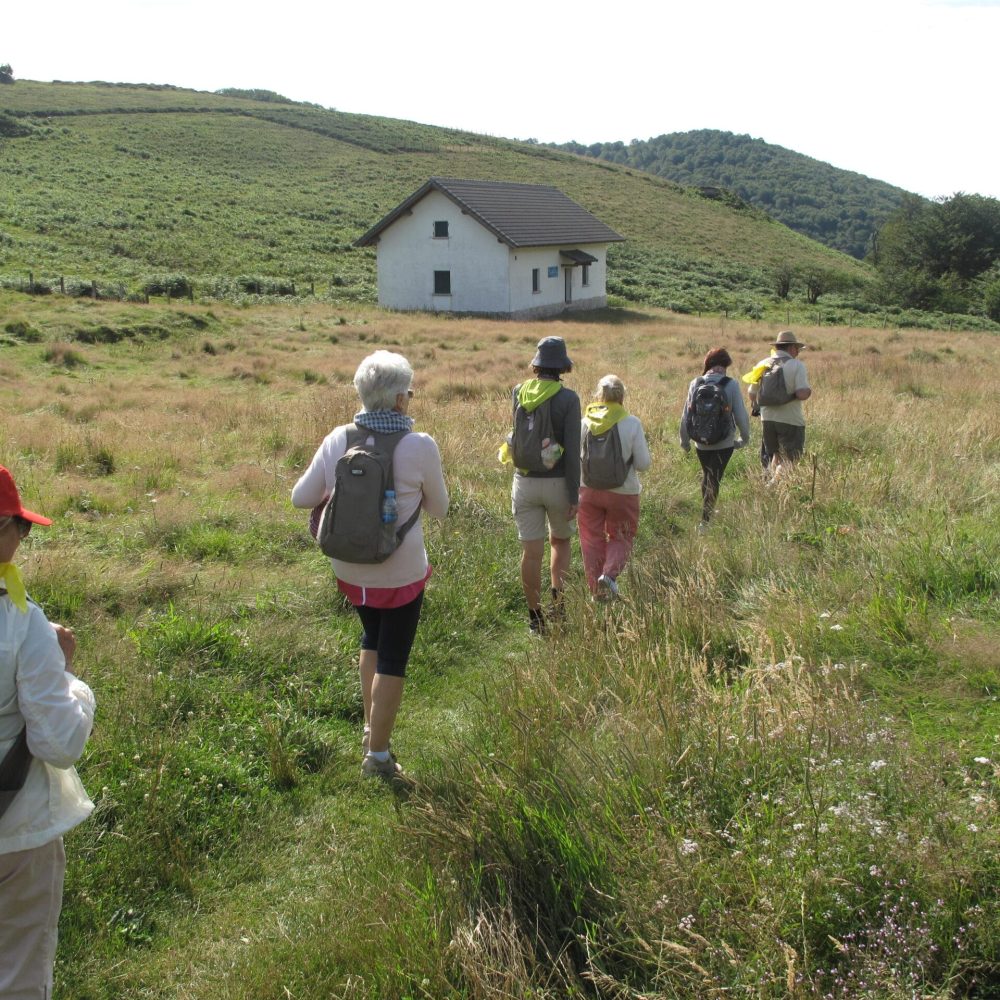

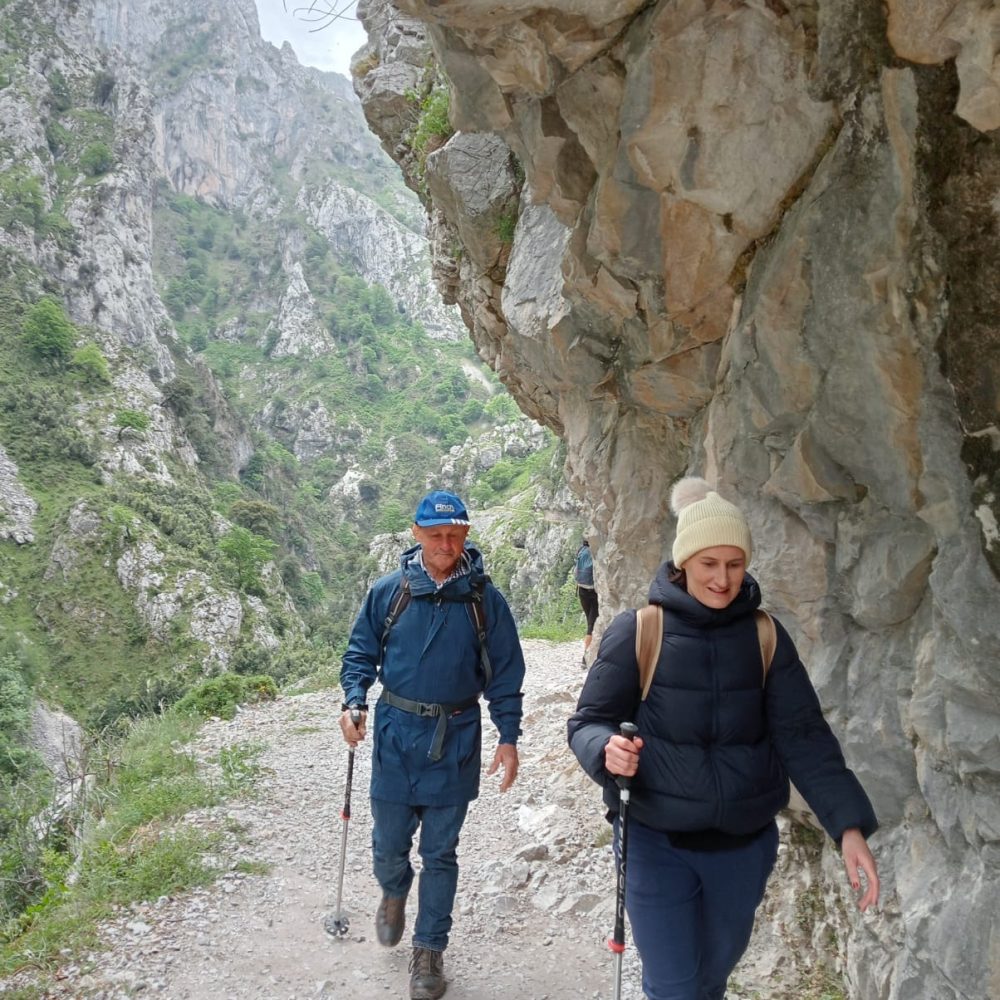
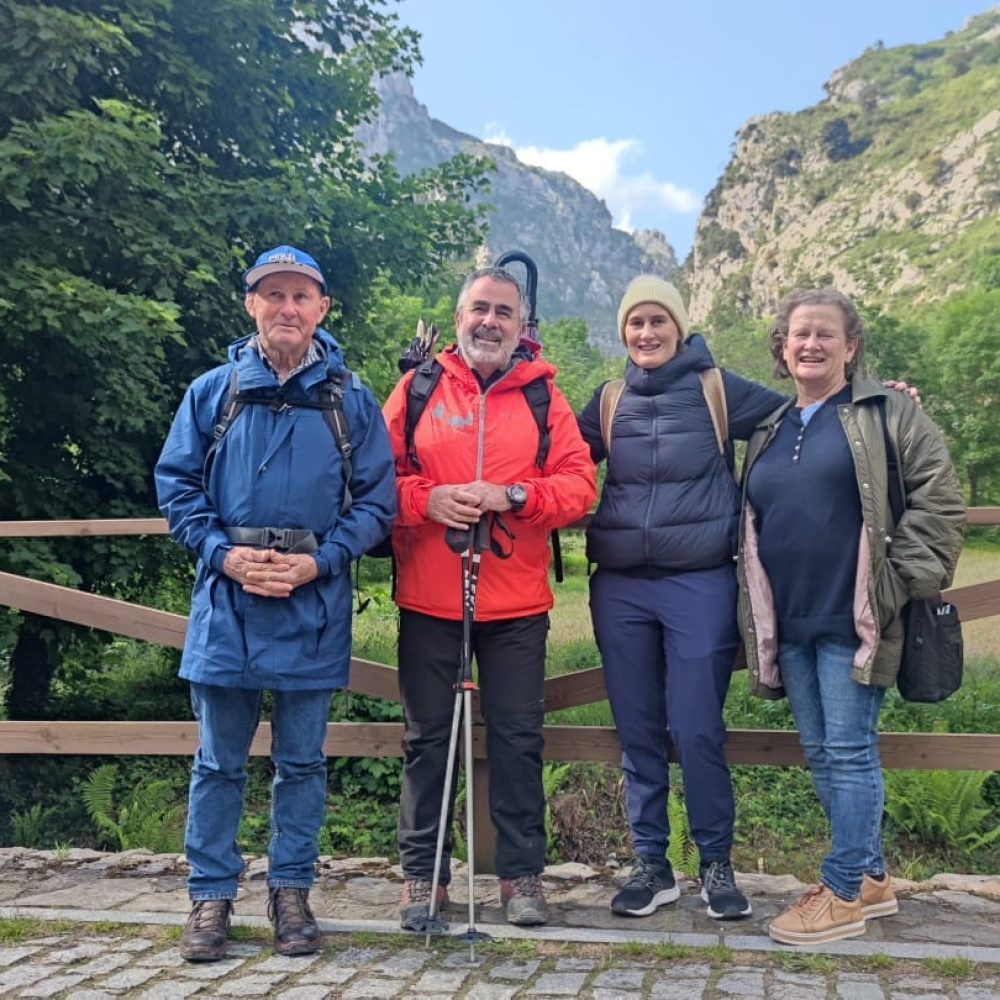
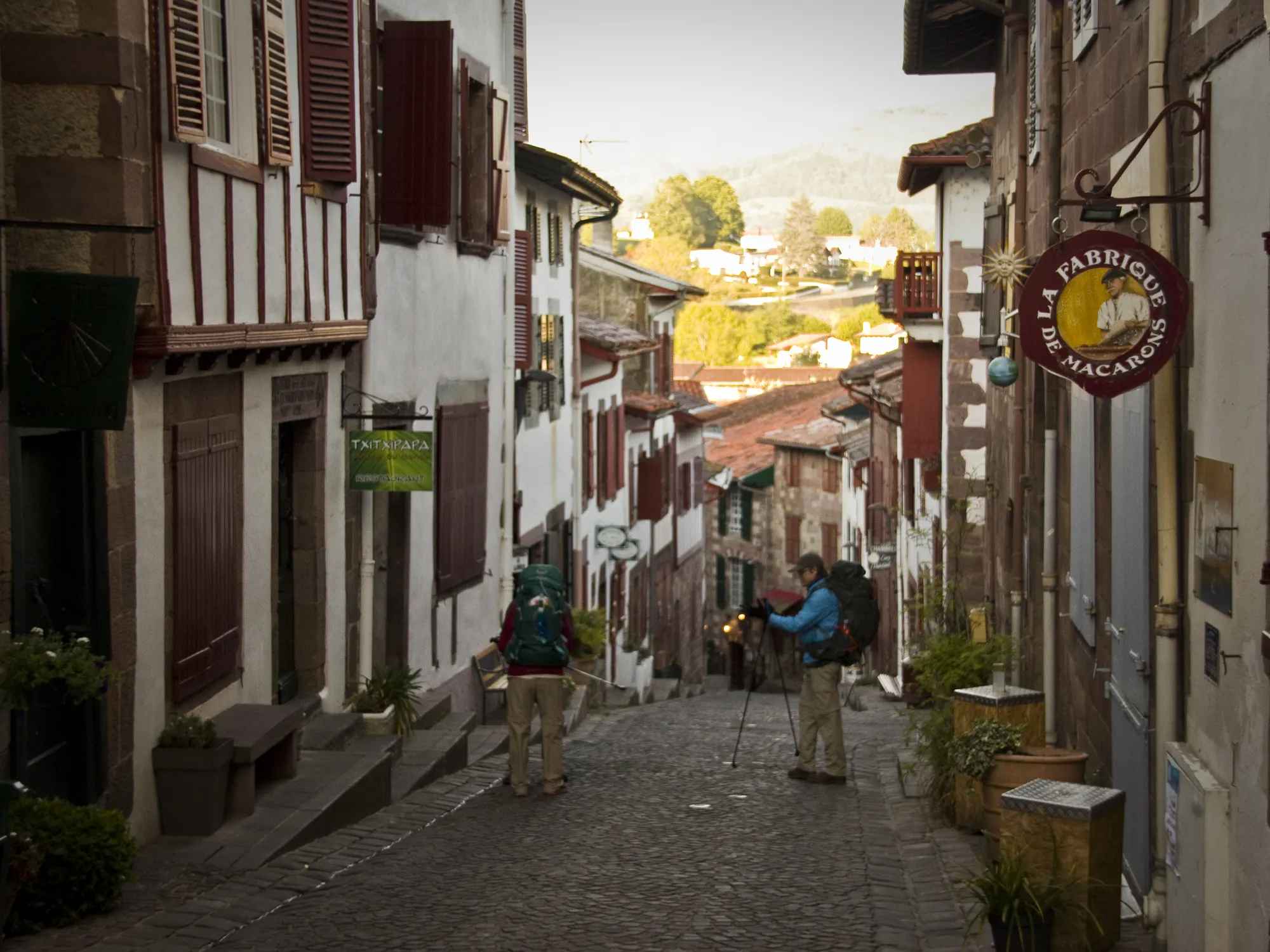
Arrive in the charming mountain town of Saint-Jean-Pied-de-Port, nestled at the foot of the Pyrenees. Its historic centre, with narrow cobblestone streets winding down the hillside, is full of character and a joy to explore. This small fortified medieval village has been one of the most popular starting points on the French Way for centuries, and its emblematic architecture earned it a place as a UNESCO World Heritage Site.
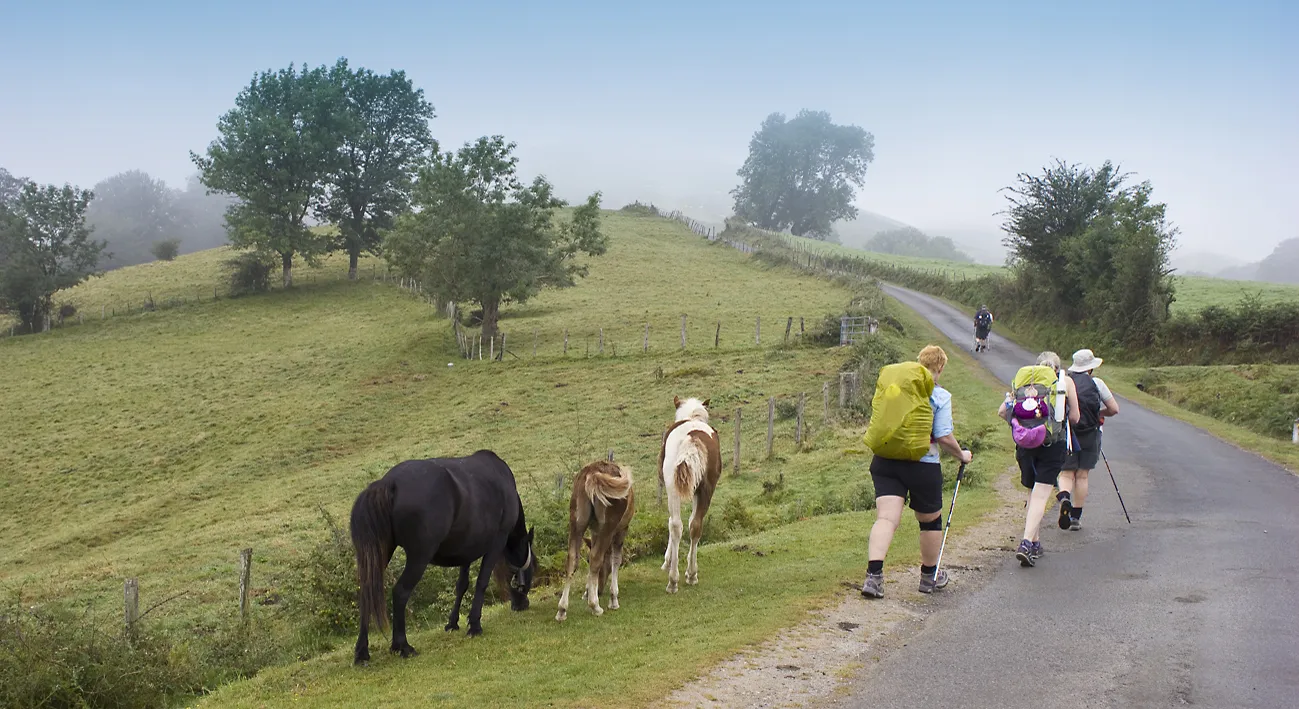
The first day of walking is widely considered one of the toughest stages of the Camino Francés — yet also one of the most rewarding. The route climbs steeply into the Pyrenees, offering breathtaking panoramic views that make every step worthwhile. For those who prefer to avoid the long, steep ascent, there is an alternative route via Valcarlos, which follows a gentler path through the valley.
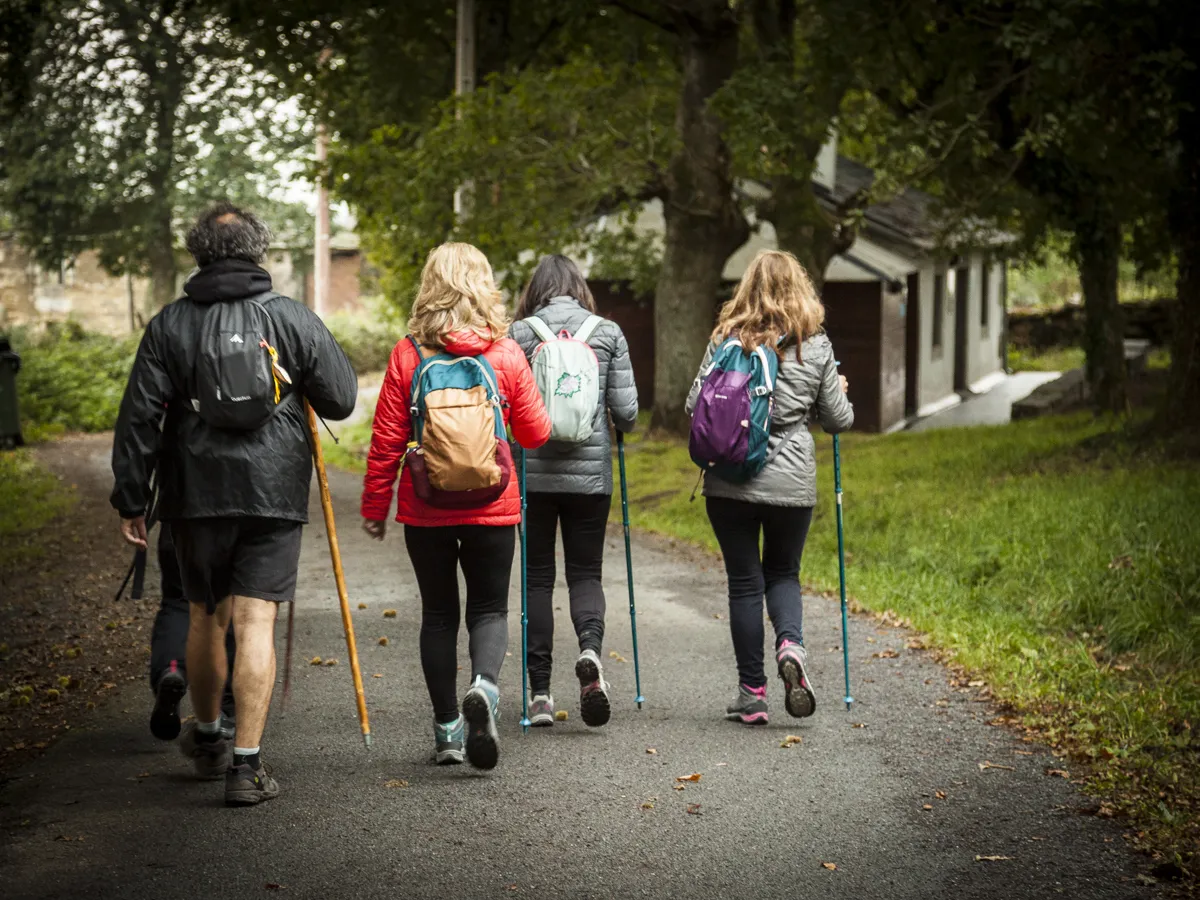
We leave France behind and cross into Spain, where the terrain becomes somewhat easier than the previous day. Although it is known as the "French Way," only the very first stage takes place in France; the rest of the route unfolds entirely in Spain. With the sweeping views of the Pyrenees now behind you, the path leads through open farmland, following the course of the Erro River.
The day begins peacefully, walking alongside the Arga River, surrounded by trees and welcome shade. As you continue, the route gradually becomes livelier on the approach to Pamplona — a vibrant and fascinating city. For those considering an extra night, it is certainly worth it: there is plenty to see and do. One of the great highlights of the French Way is precisely this chance to visit some of the most important cities in northern Spain along the journey.
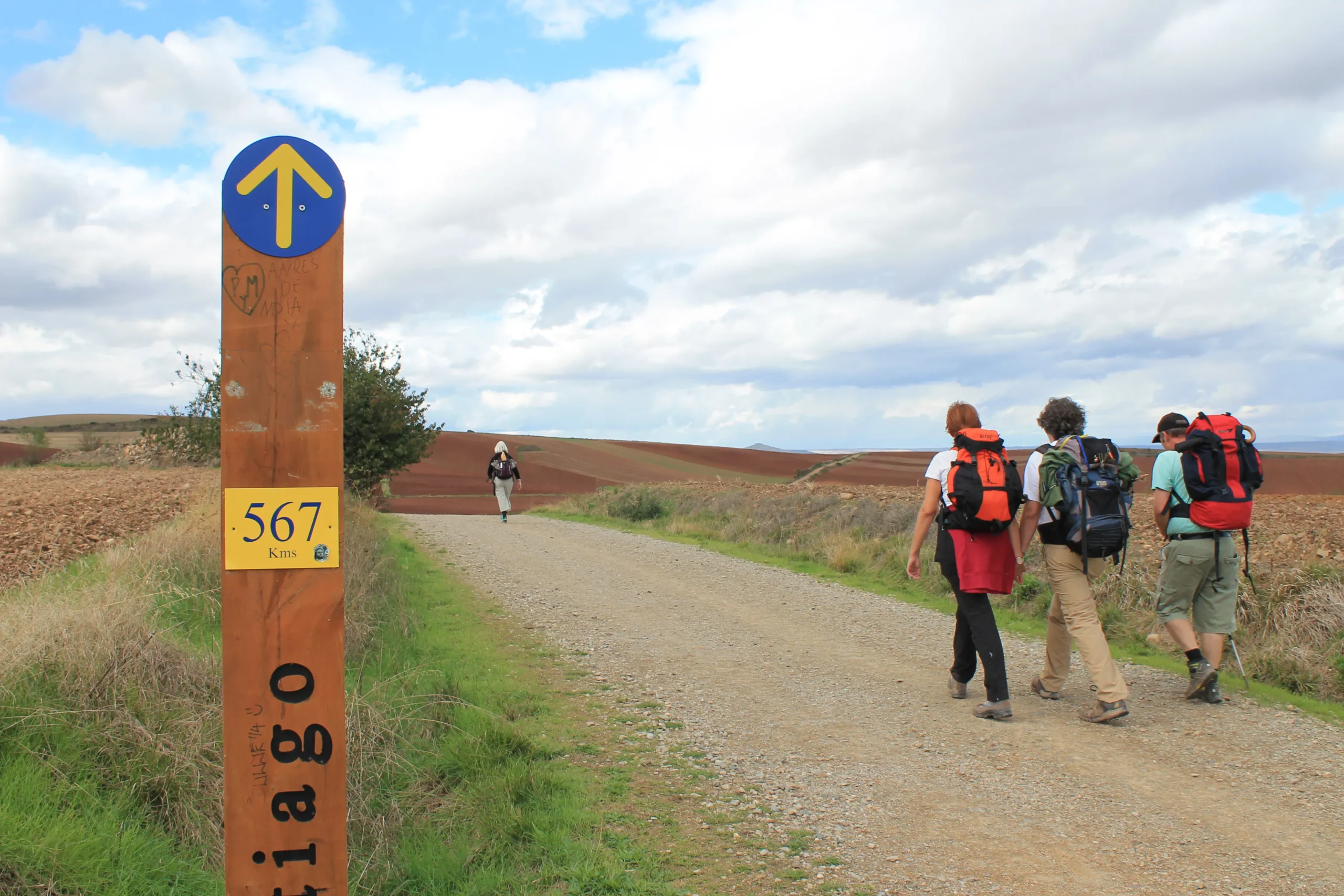
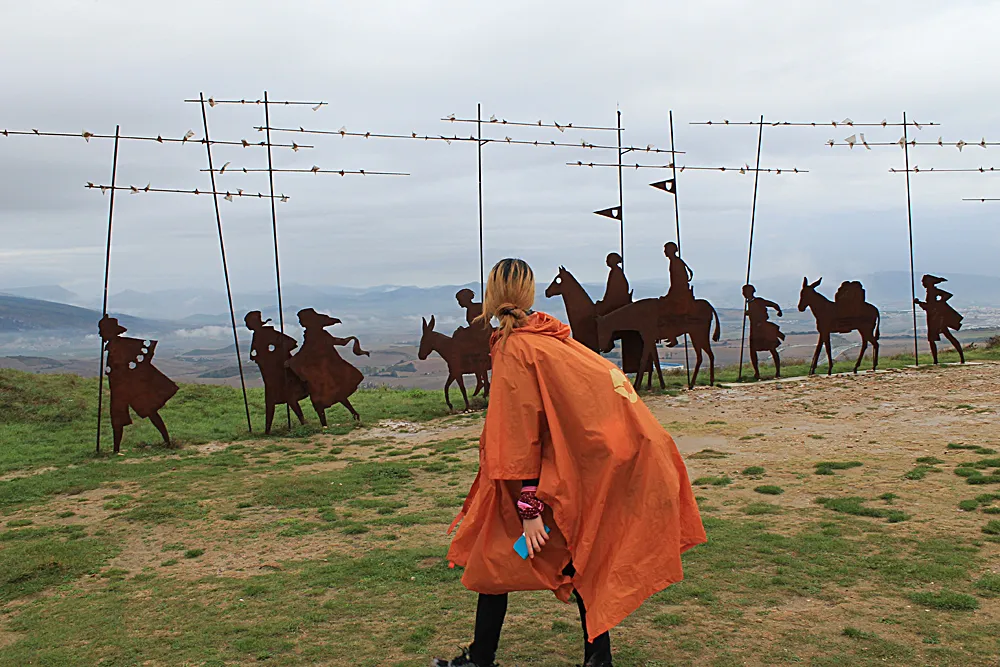
The day begins along paved roads as you leave Pamplona behind. As the route continues, you will have the chance to admire the iconic Pilgrim Statue at the Alto del Perdón, one of the most symbolic landmarks along the entire Camino.
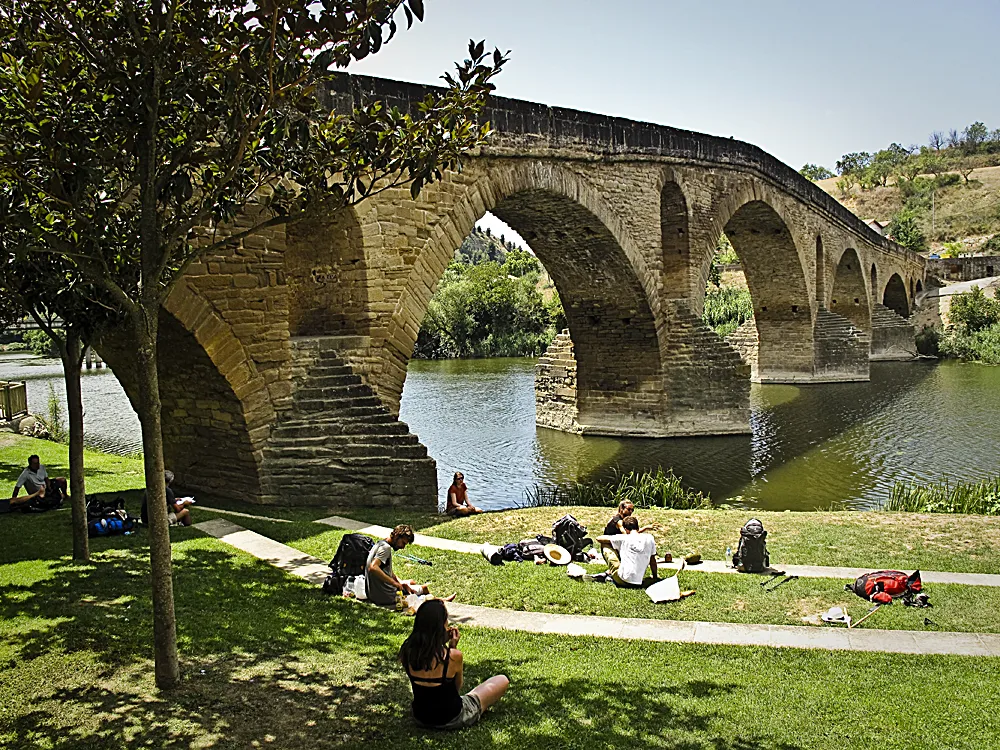
The walk from Puente de la Reina to Estella is a relaxing stage through farms and vineyards. Along the way, you will pass the ruins of the Monasterio de la Bogota, local wineries, and old Roman bridges before arriving in the welcoming town of Estella.
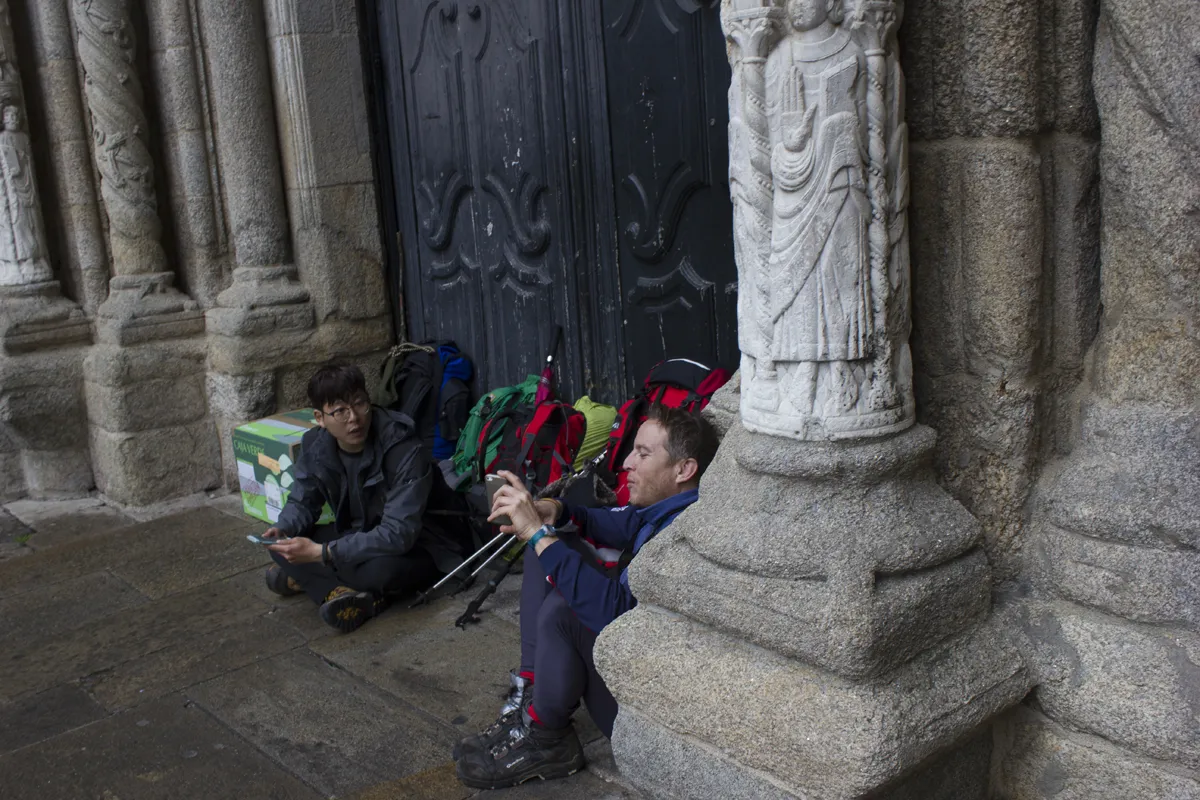
This stage is a pleasant walk through the Navarra countryside. The route passes rolling hills, vineyards, and small farms, offering a peaceful and scenic experience. Los Arcos, a charming village with historic streets and traditional architecture, provides all the necessary services for pilgrims and a welcoming place to rest before continuing along the Camino.
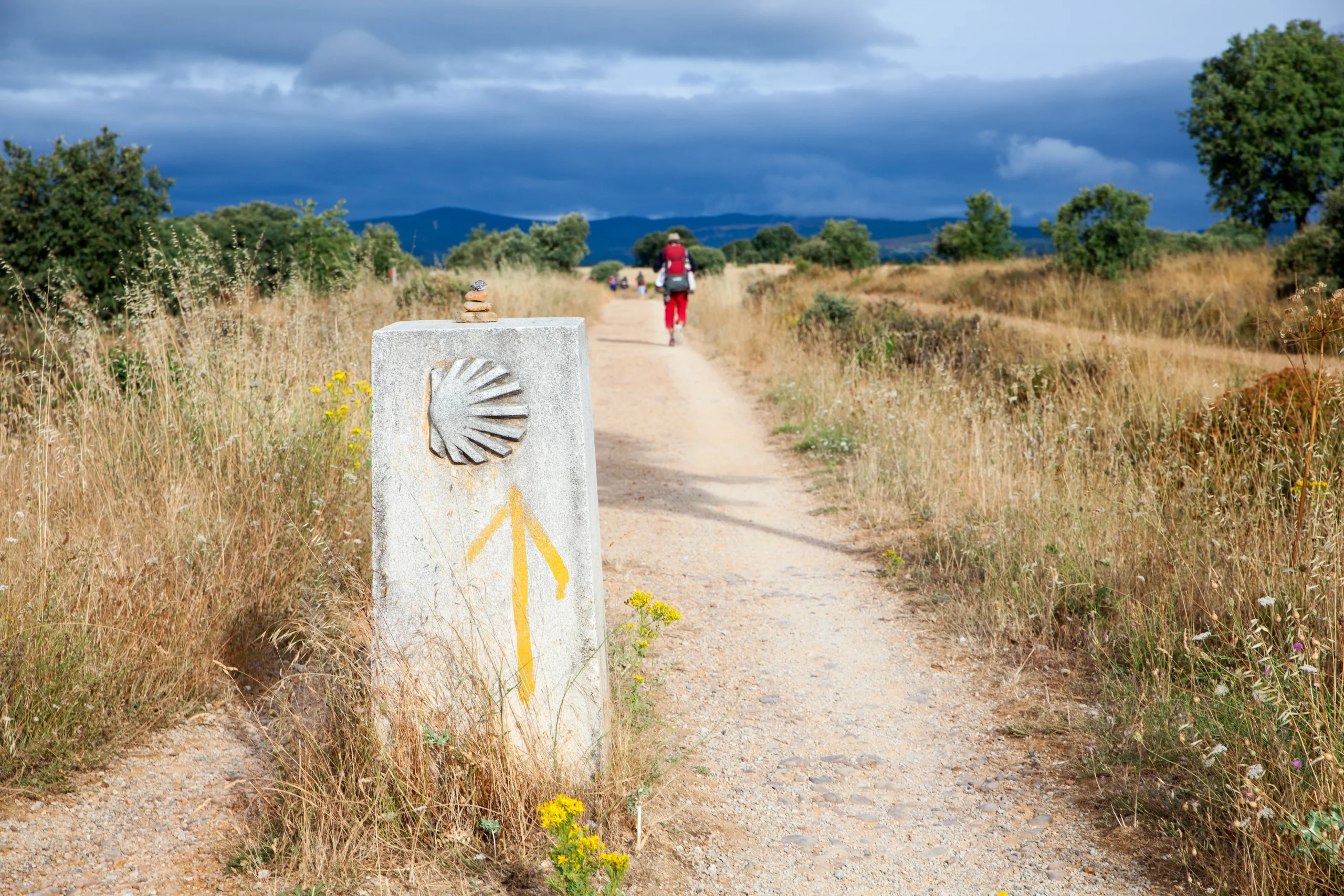
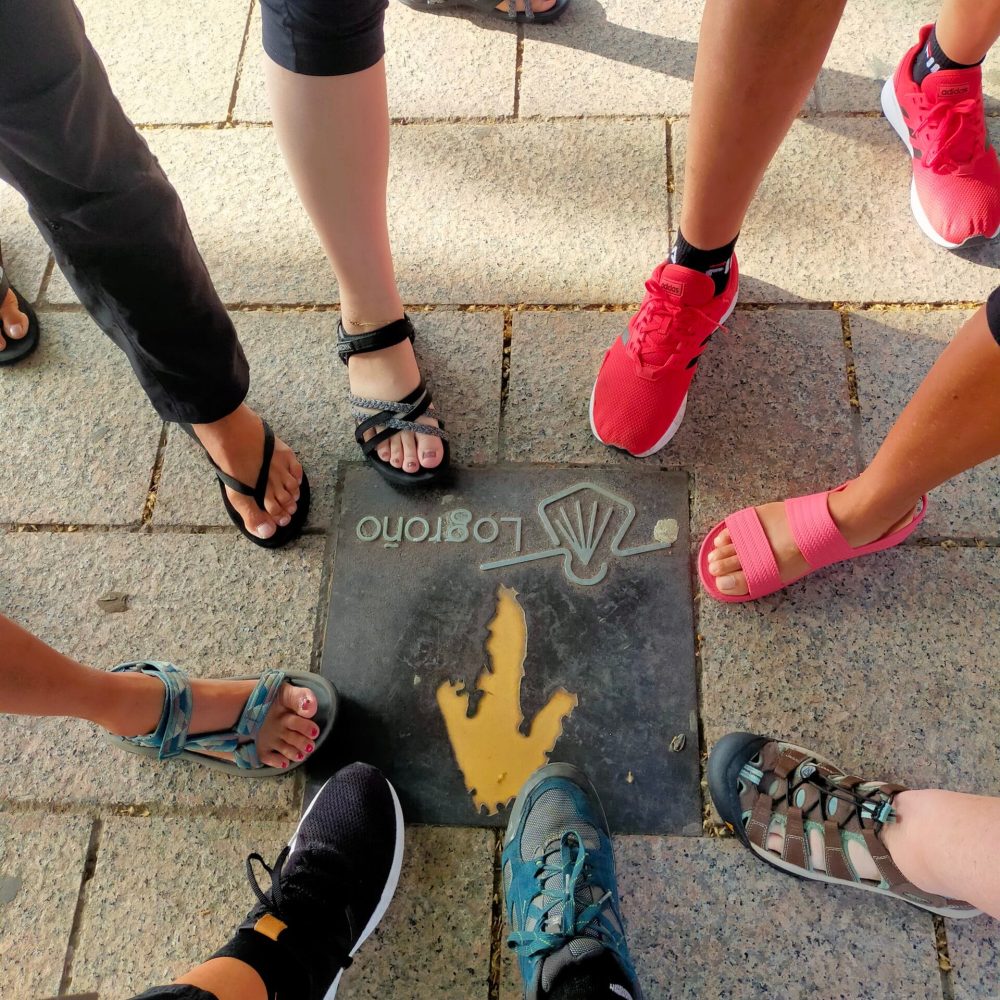
A beautiful stage, passing through peaceful natural areas until you reach the outskirts of Logroño, the capital of the La Rioja region. Logroño is one of the most iconic stops along the Camino Francés and an ideal spot to consider staying an extra night to soak in the local culture and gastronomy.
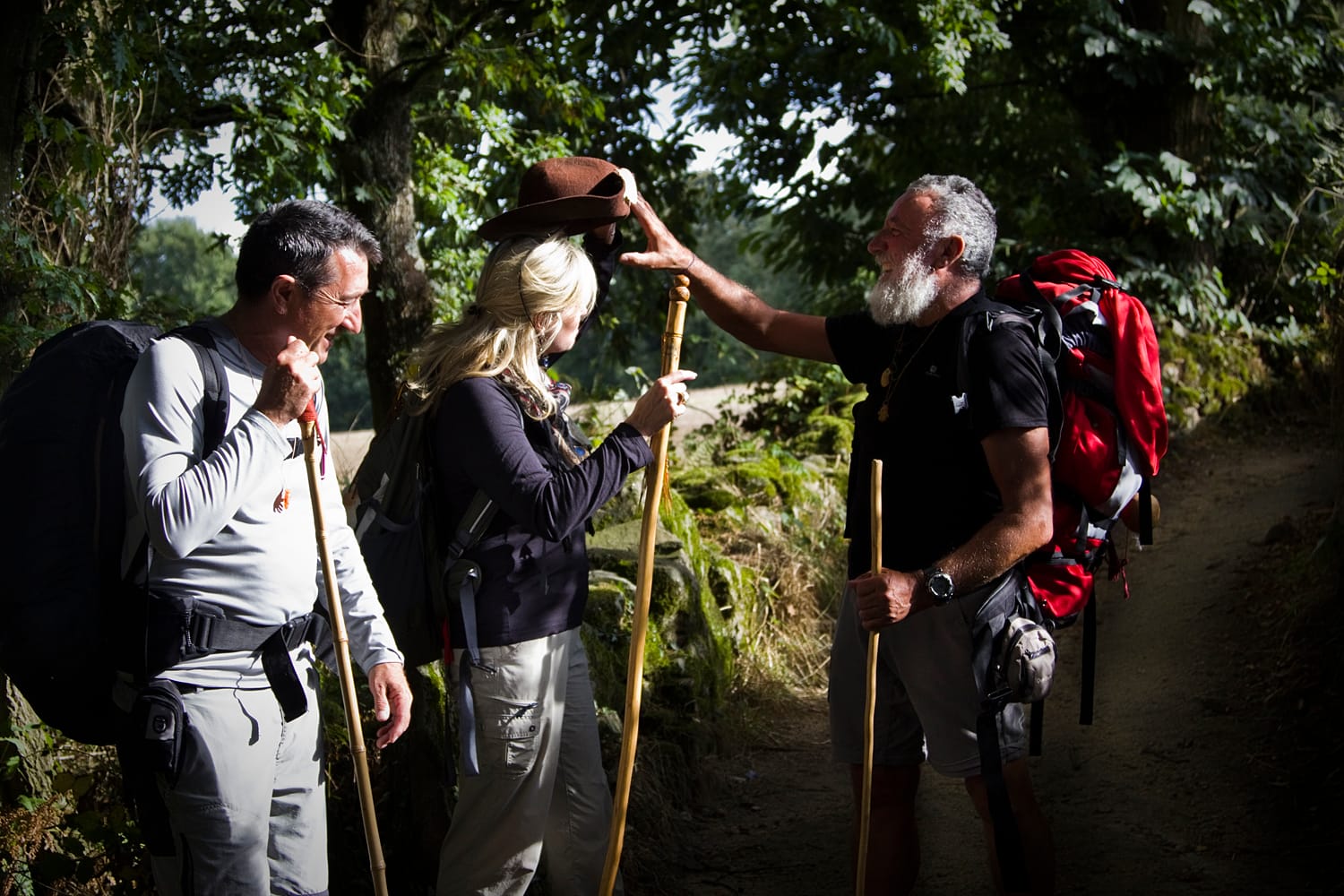
The route follows paved roads as you leave Logroño behind, and shortly after, the scenery opens up to more rural landscapes. If this stage feels too long, it is possible to add an extra night in Navarrete, conveniently located along the way.
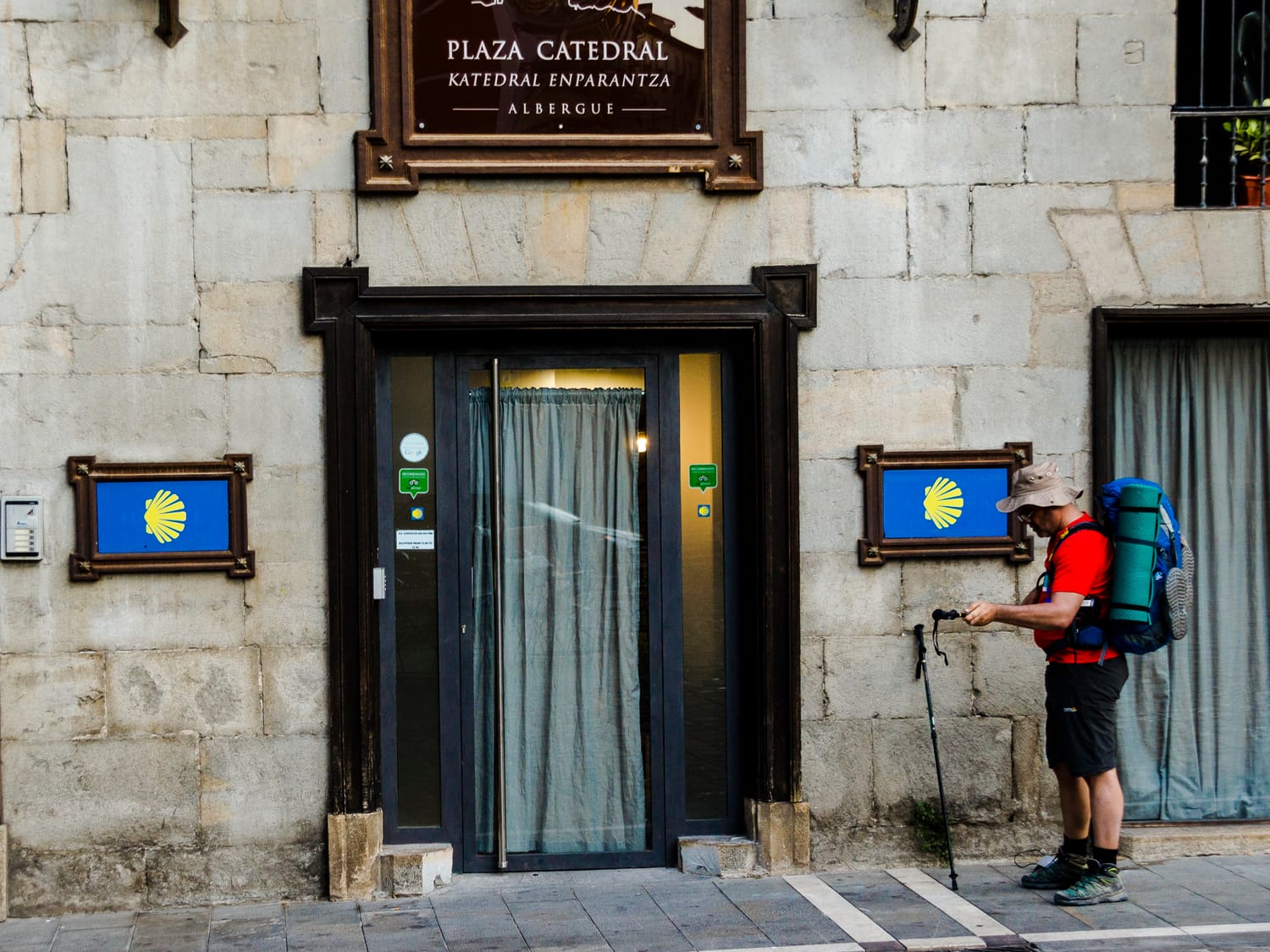
Today you will walk through some of Spain's most rural landscapes, passing farms and open countryside, far from the main roads. A truly immersive day in the quiet heart of the Camino.
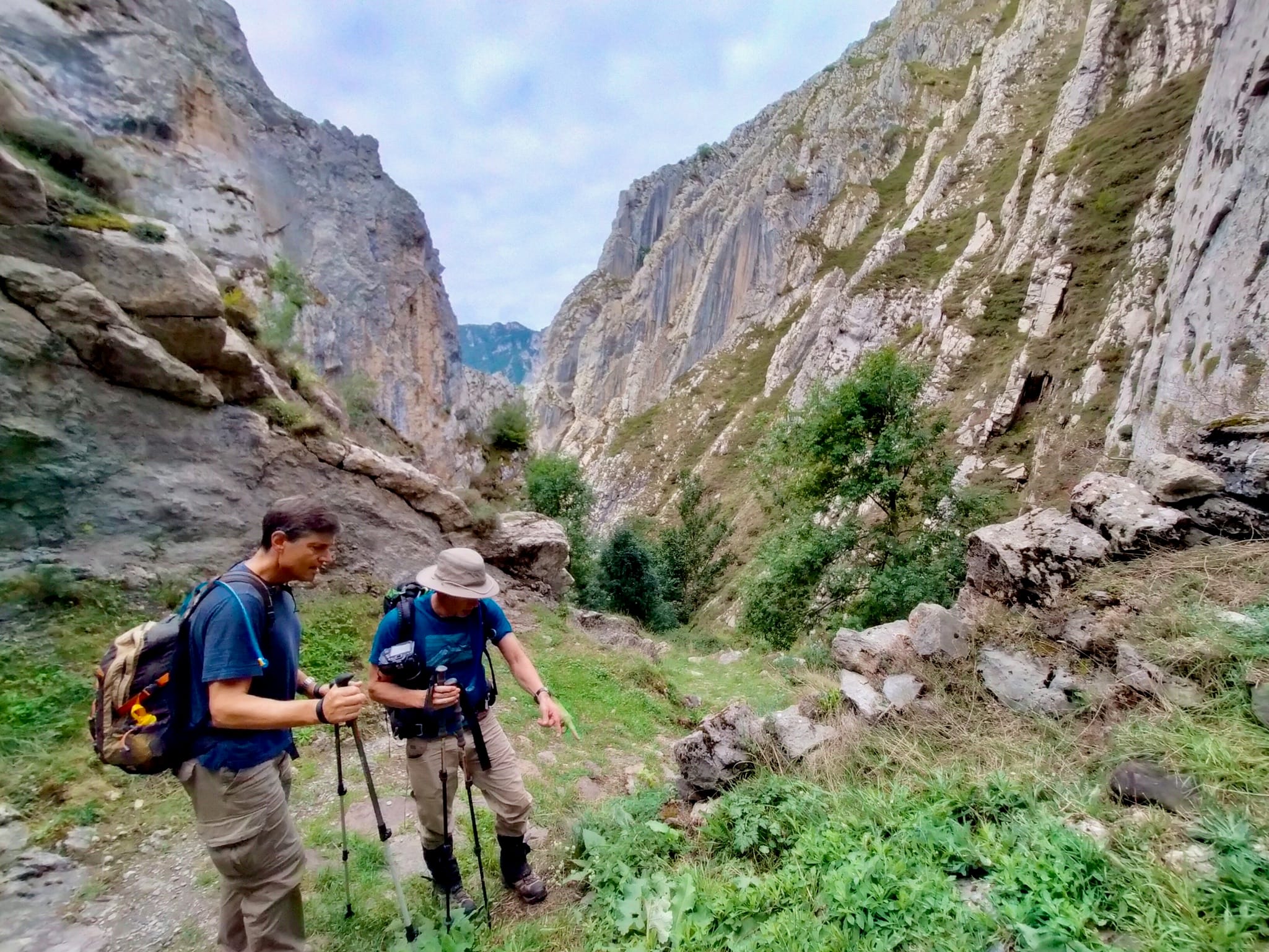
On the way to Belorado, you will wander through small wooded areas and fields of crops, with the last mountains rising on the horizon before reaching the vast plains of the Meseta. This stretch is known to challenge many pilgrims on the French Way, testing both endurance and spirit as they cross one of the most introspective parts of the Camino de Santiago.
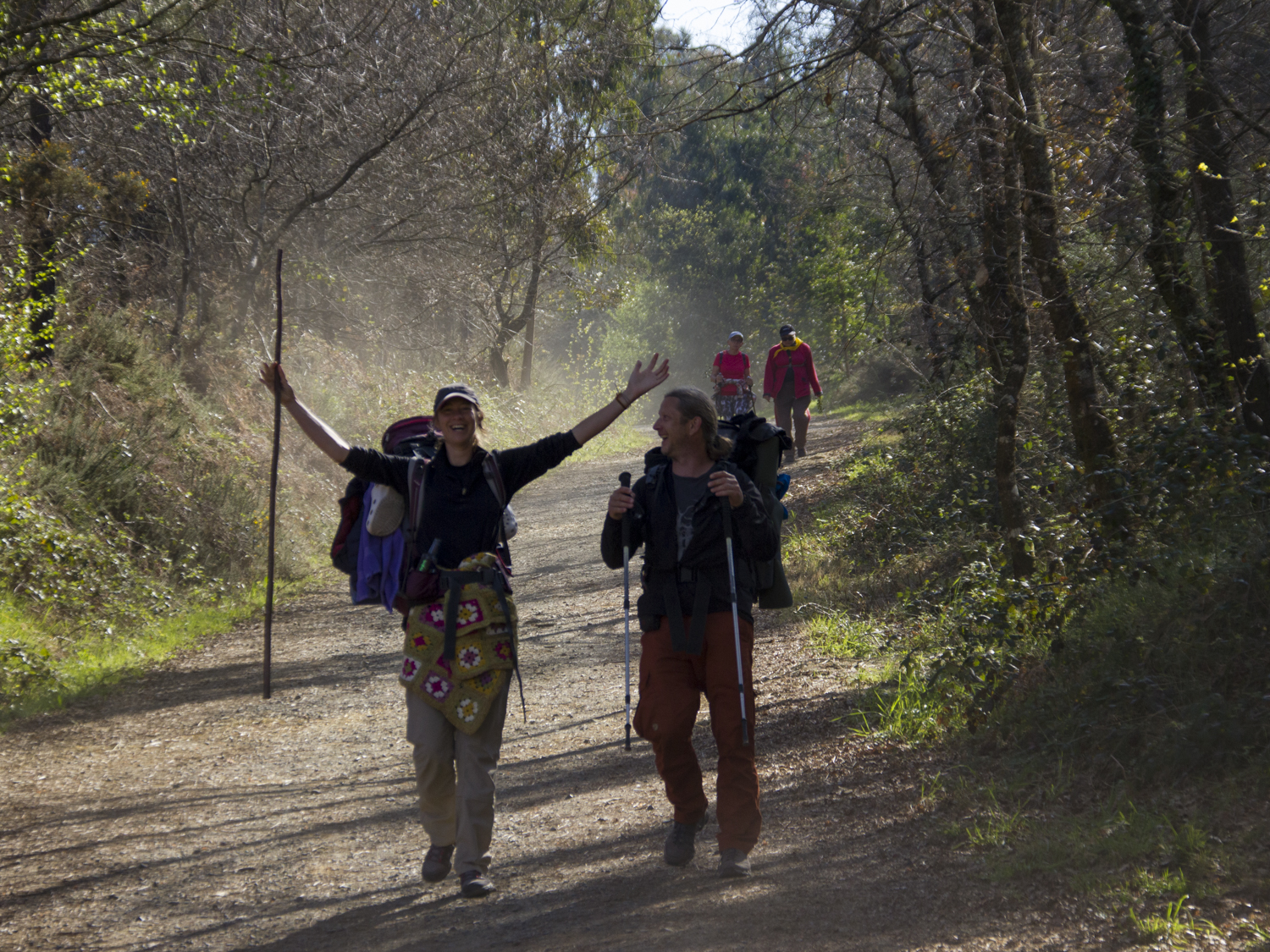
A relaxing day walking through rural landscapes and crossing the Oca Mountains. The gentle terrain and natural beauty make this a stage to savour at a steady pace.
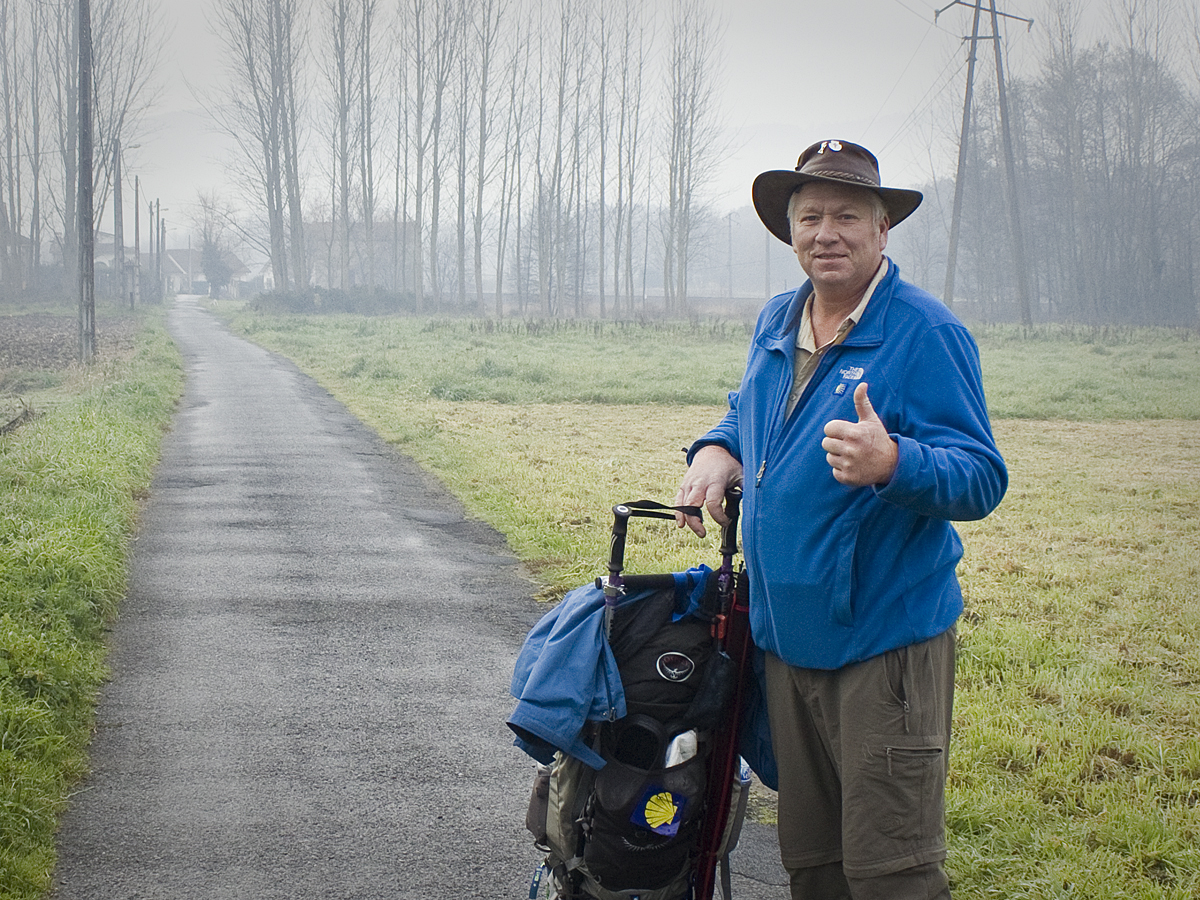
From San Juan de Ortega, the walk is leisurely and mostly downhill toward Burgos. You descend into the peaceful valley of the Río Vena, and after passing Atapuerca, there is one final hill to conquer before the gentle descent into the city. Once in Burgos, be sure to visit the cathedral — the 13th-century Catedral de Santa María is one of Spain's largest and most beautiful, blending various architectural styles with a predominantly Gothic character.
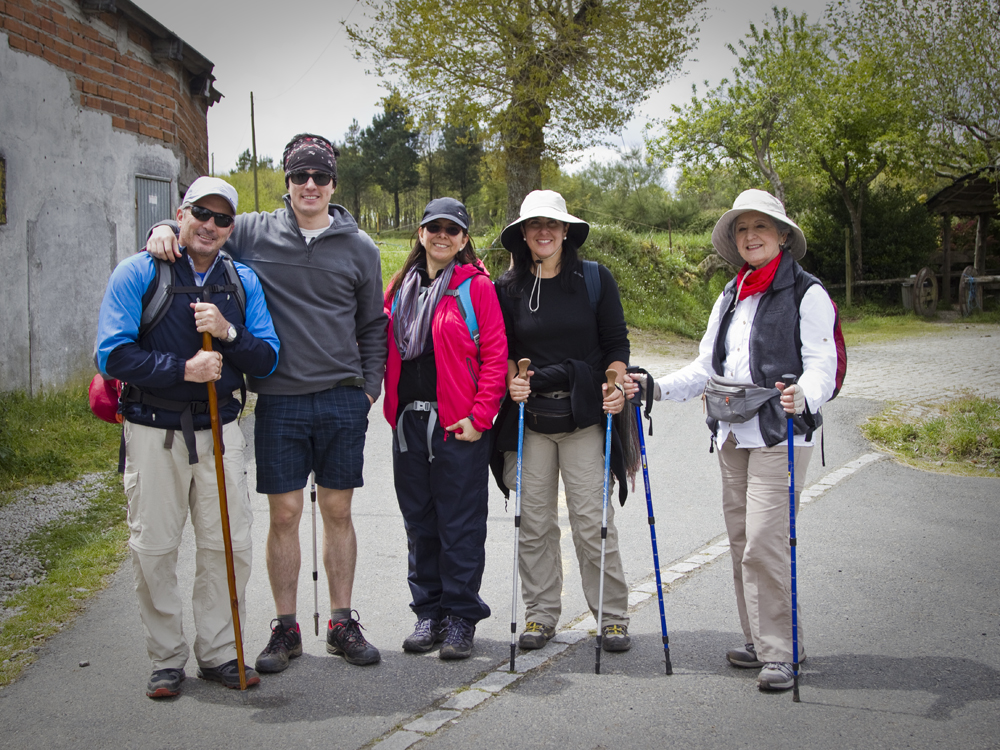
Once you leave Burgos behind, the walk to Hornillos del Camino takes you through rural areas and the typical croplands of this region. A quiet transition from the buzz of the city back into the tranquil rhythm of the Meseta.
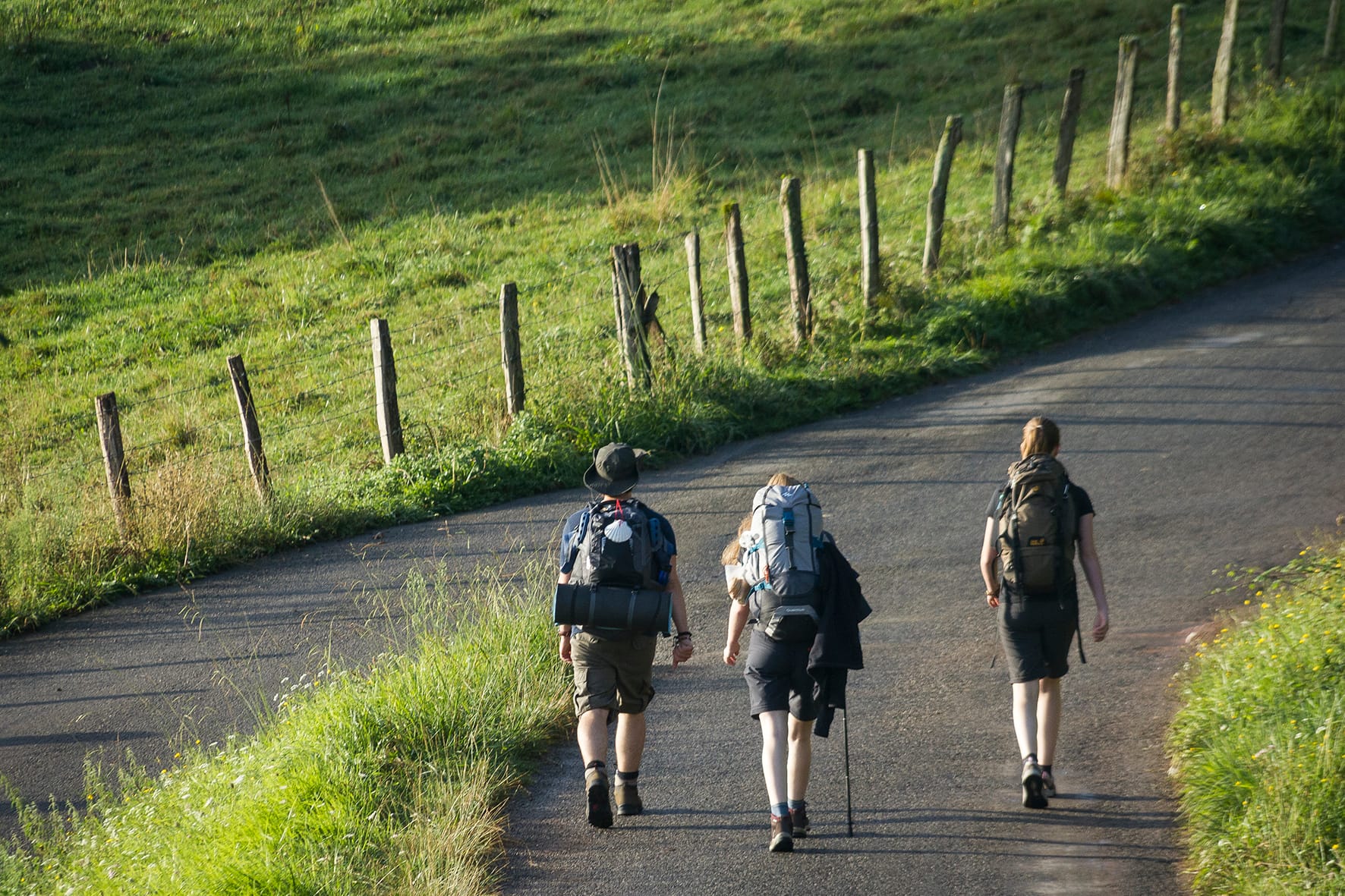
After leaving Hornillos del Camino, there are few towns on the way to Castrojeriz, so be sure to carry enough water and supplies. Once again, you travel across the quiet, expansive Meseta, eventually reaching Hontanas — a small village nestled in a gentle fold of the landscape.
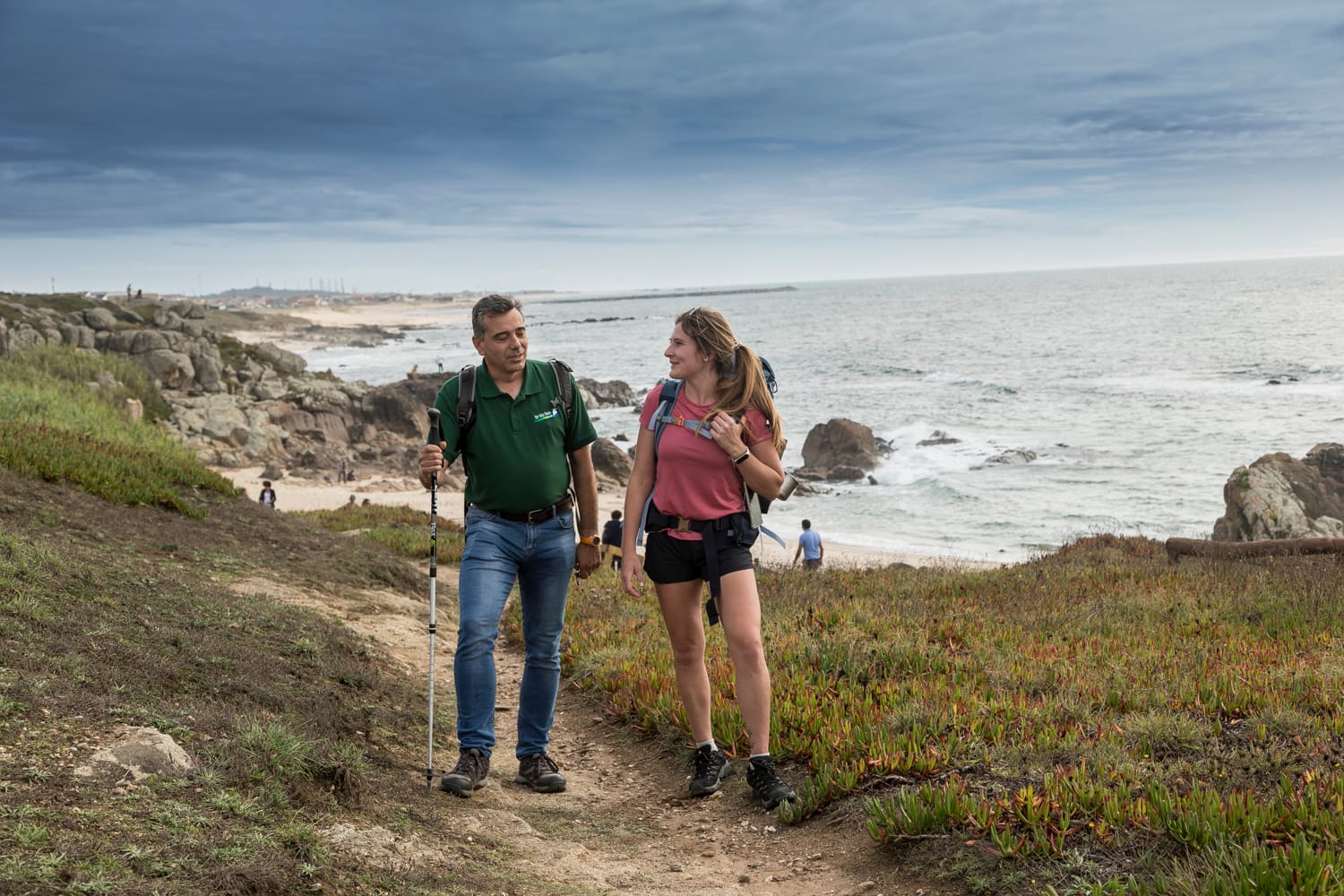
Today you leave behind the Province of Burgos and arrive in the Province of Palencia. The route reaches the highest point of the Meseta, and you will see the Pisuerga River — a tributary of the Duero, one of the main rivers in Spain.
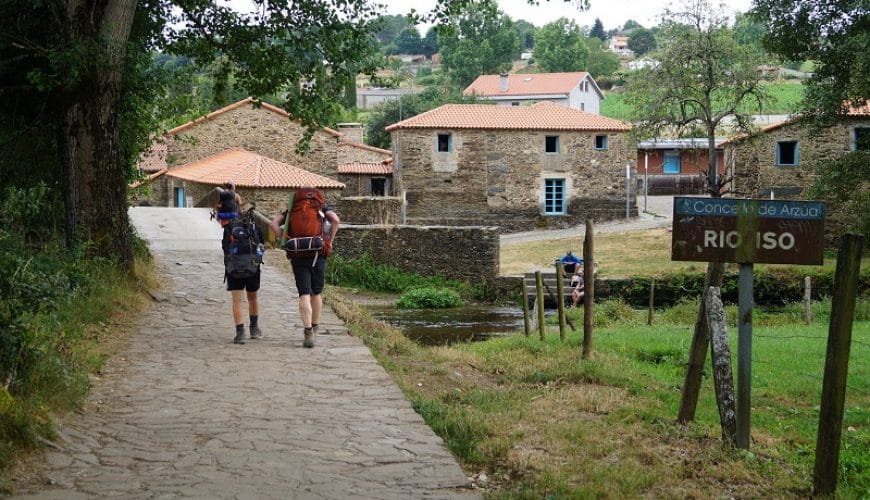
A flat and easy walk across the open landscapes of Castilla y León. The route follows quiet paths and stretches alongside the Canal de Castilla before crossing wide cereal fields typical of the region. Though services along the way are limited, the stage is peaceful and straightforward. Carrión de los Condes, a historic town with strong pilgrim traditions, welcomes walkers with a rich artistic heritage and all the necessary services for rest and recovery.
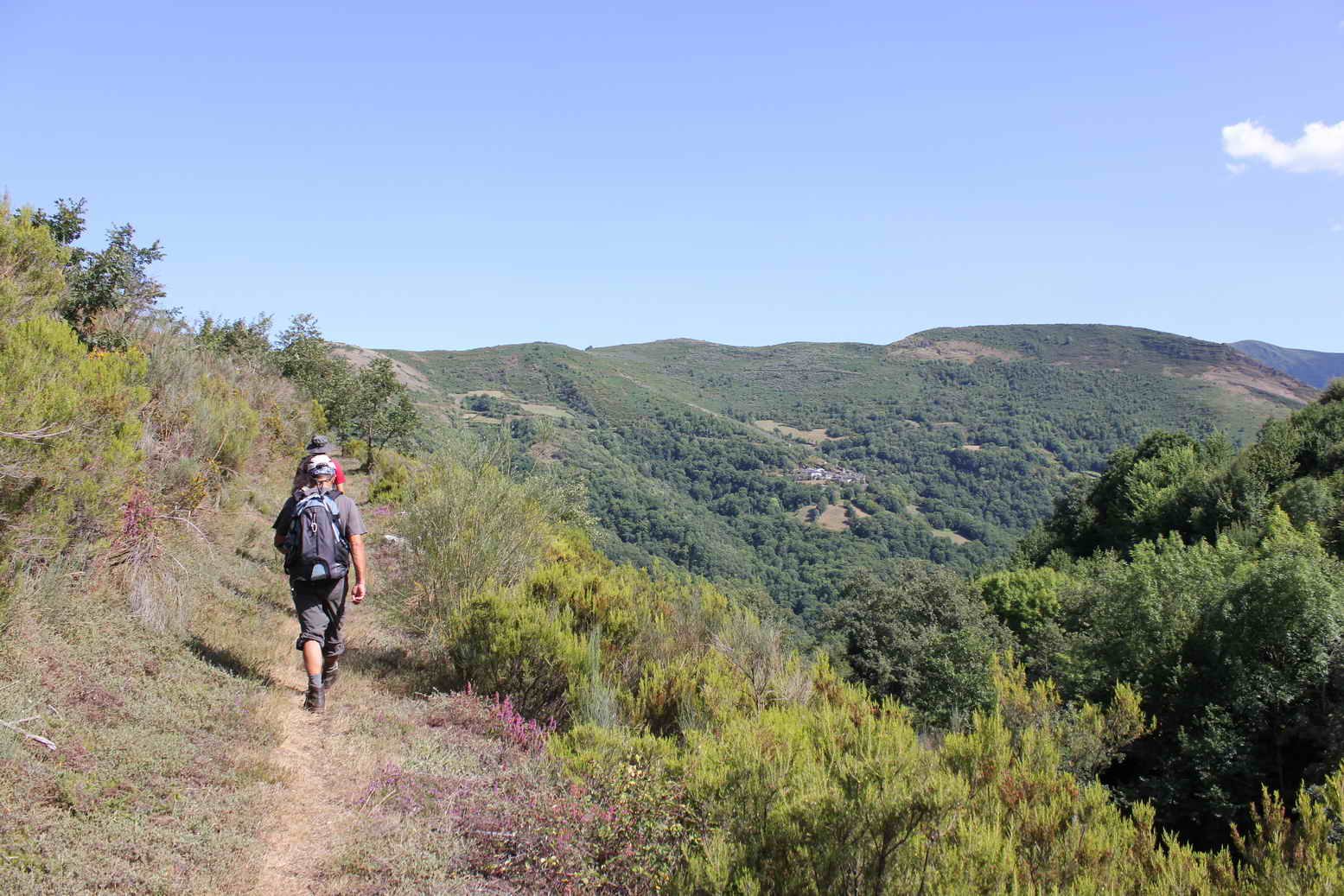
After leaving Carrión, pilgrims walk for several kilometres across open farmland with very few services along the way, so it is important to set off prepared. The path is mostly flat and follows quiet rural tracks through the vast plains of Castilla y León. Terradillos de los Templarios, a small village with links to the medieval Order of the Temple, offers basic accommodation and a peaceful atmosphere for a well-earned rest.
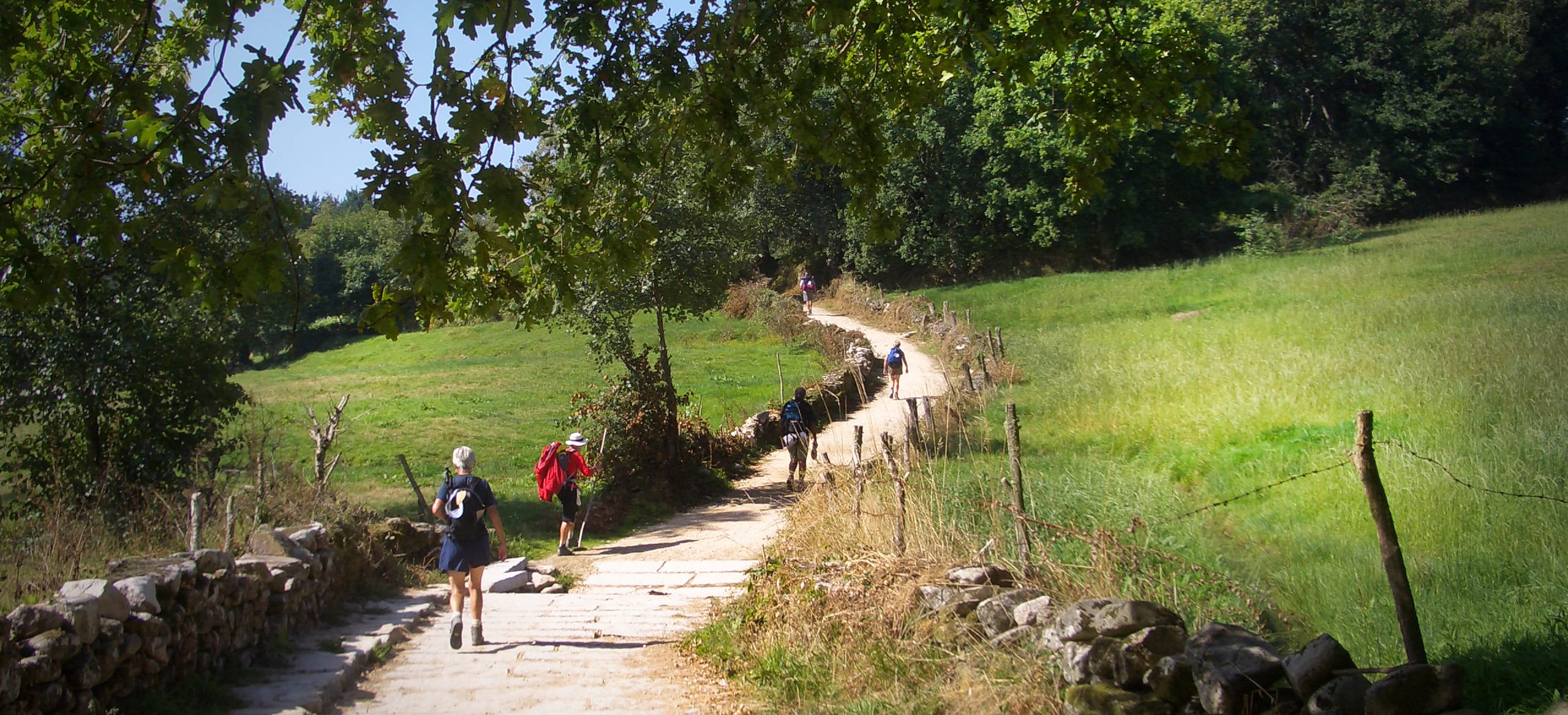
The stage continues across the wide, open plains of Castilla y León. This is a peaceful and mostly flat stretch, following quiet rural tracks surrounded by vast cereal fields and big skies. Services along the way are limited, so it is advisable to start the day well prepared.
A gentle and mostly flat walk through the agricultural landscapes of León province. The path follows rural tracks and quiet stretches that allow pilgrims to enjoy the calm rhythm of the Meseta.
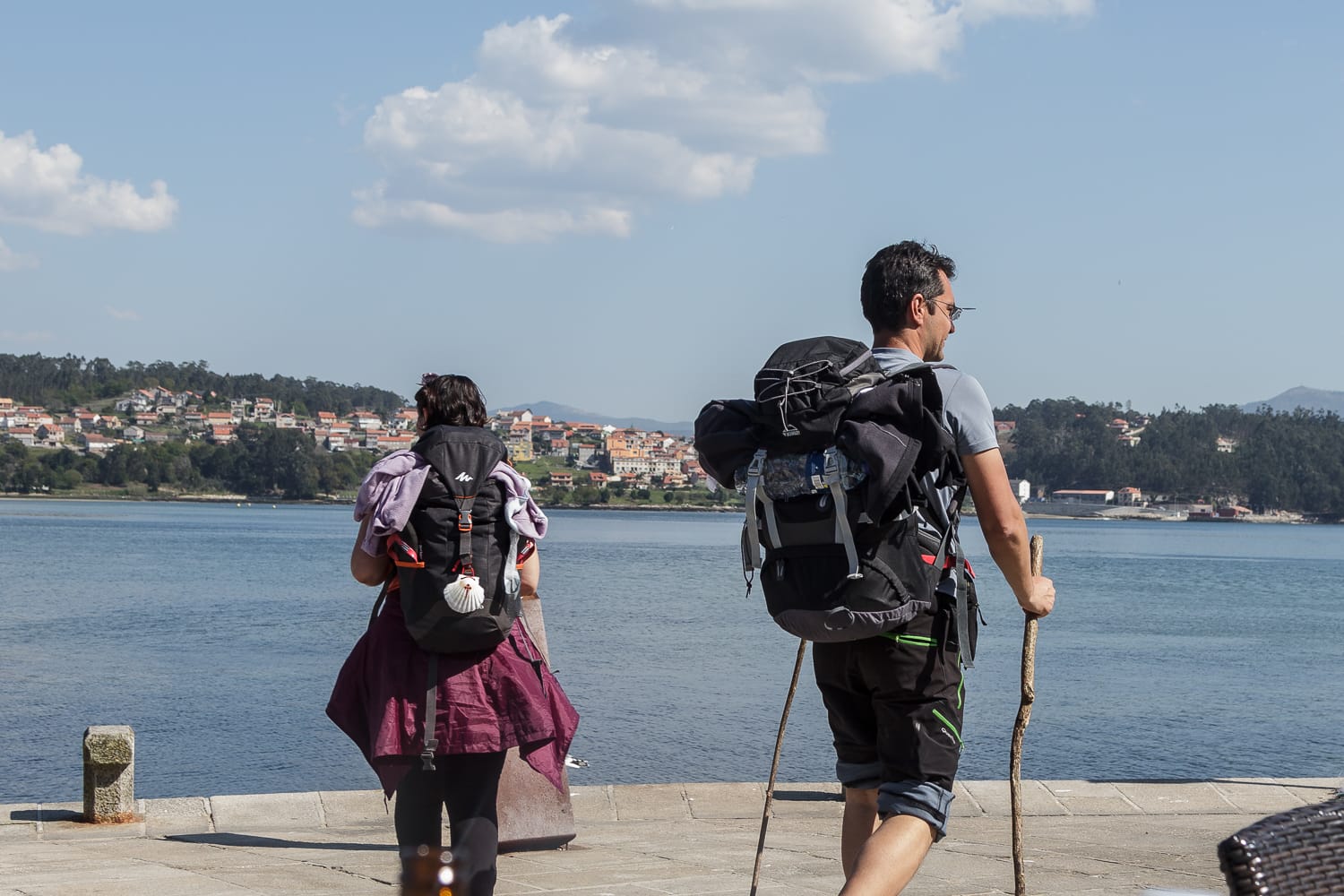
A relatively short and easy walk that gradually leads from rural landscapes into a vibrant historic city. The route alternates between quiet paths and suburban areas as you approach León. The city is one of the most important stops along the Camino, renowned for its impressive Gothic cathedral, lively atmosphere, and excellent gastronomy. León offers all services and a rich cultural heritage, making it a perfect place to rest and explore before continuing the journey westward.
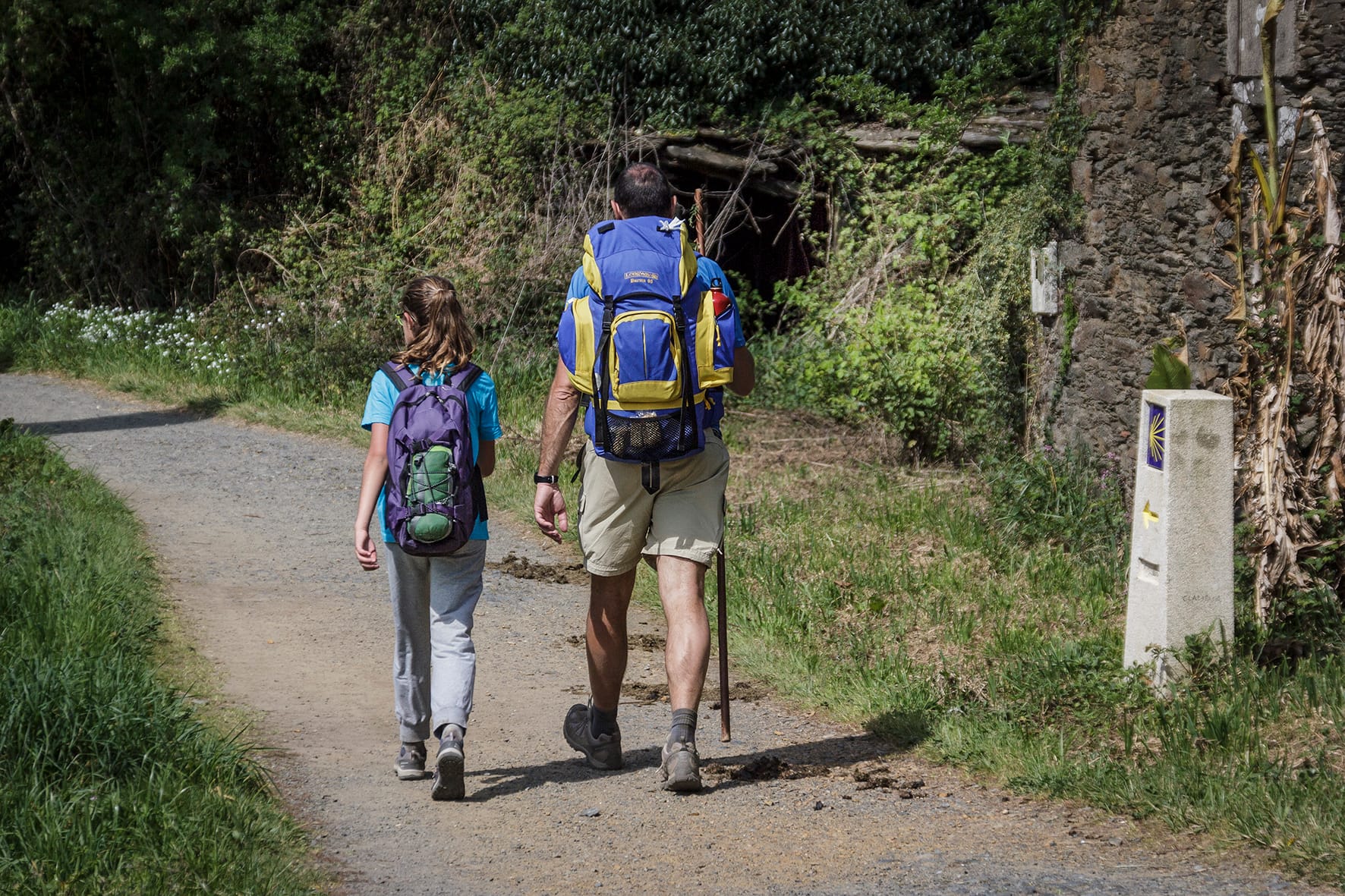
This stage leads pilgrims out of the historic city and back into the peaceful countryside of León province. After crossing the Bernesga River, the route follows gentle paths and quiet tracks through farmland and small villages. A mostly flat and pleasant stage, allowing walkers to settle into a steady rhythm before reaching Villavante — a small and welcoming village that offers basic services and a calm place to rest.
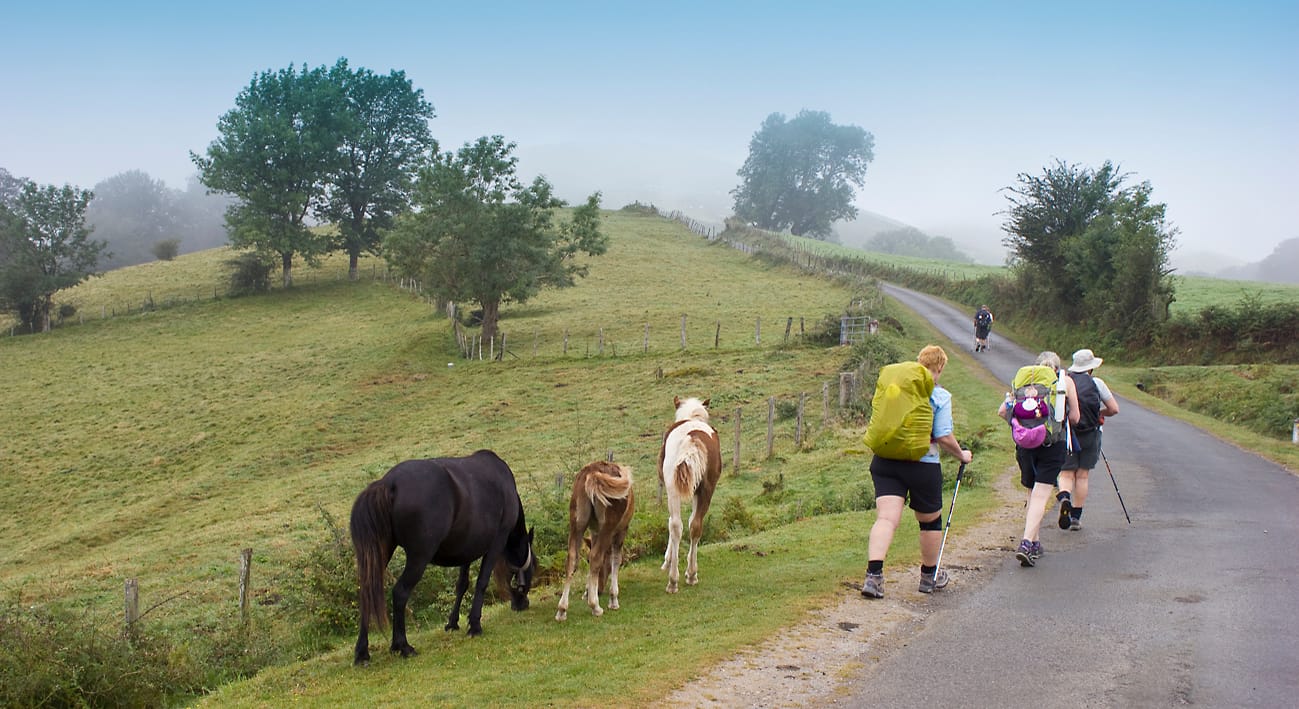
Pilgrims walk through open countryside and small traditional villages, with mostly flat terrain that makes for a steady and comfortable day. As you approach Astorga, the scenery begins to change, hinting at the mountains that lie ahead. Astorga, a historic crossroads town with Roman origins and rich medieval heritage, welcomes walkers with its impressive monuments, lively atmosphere, and all the services needed for rest before continuing toward the hills of León.
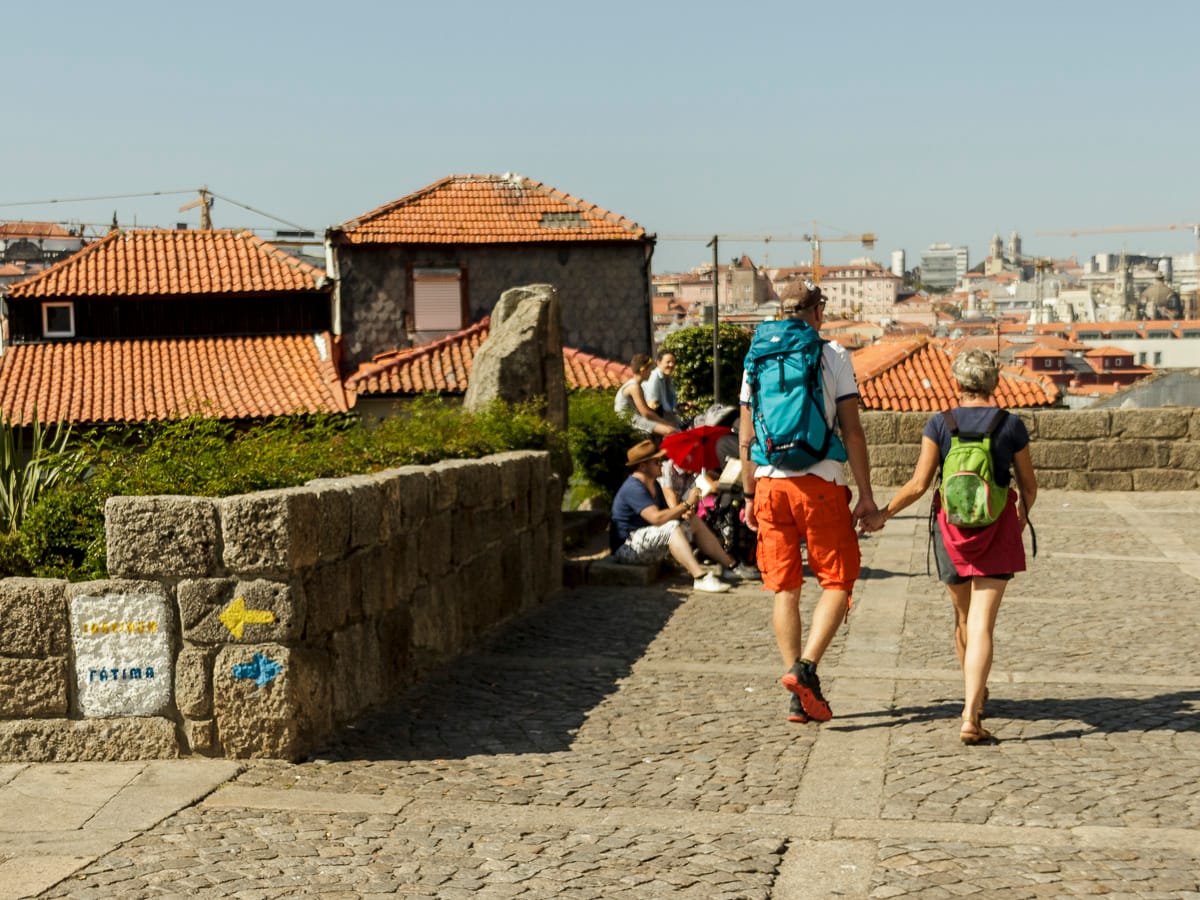
This stage marks the beginning of the ascent toward the Montes de León. After leaving Astorga, the route gradually climbs through open countryside and traditional Maragato villages, with increasingly beautiful mountain views. The terrain becomes more demanding as you approach Rabanal del Camino — a small and charming mountain village with strong pilgrim traditions. Its peaceful atmosphere and welcoming accommodations make it an ideal place to rest before tackling the climb to Cruz de Ferro.
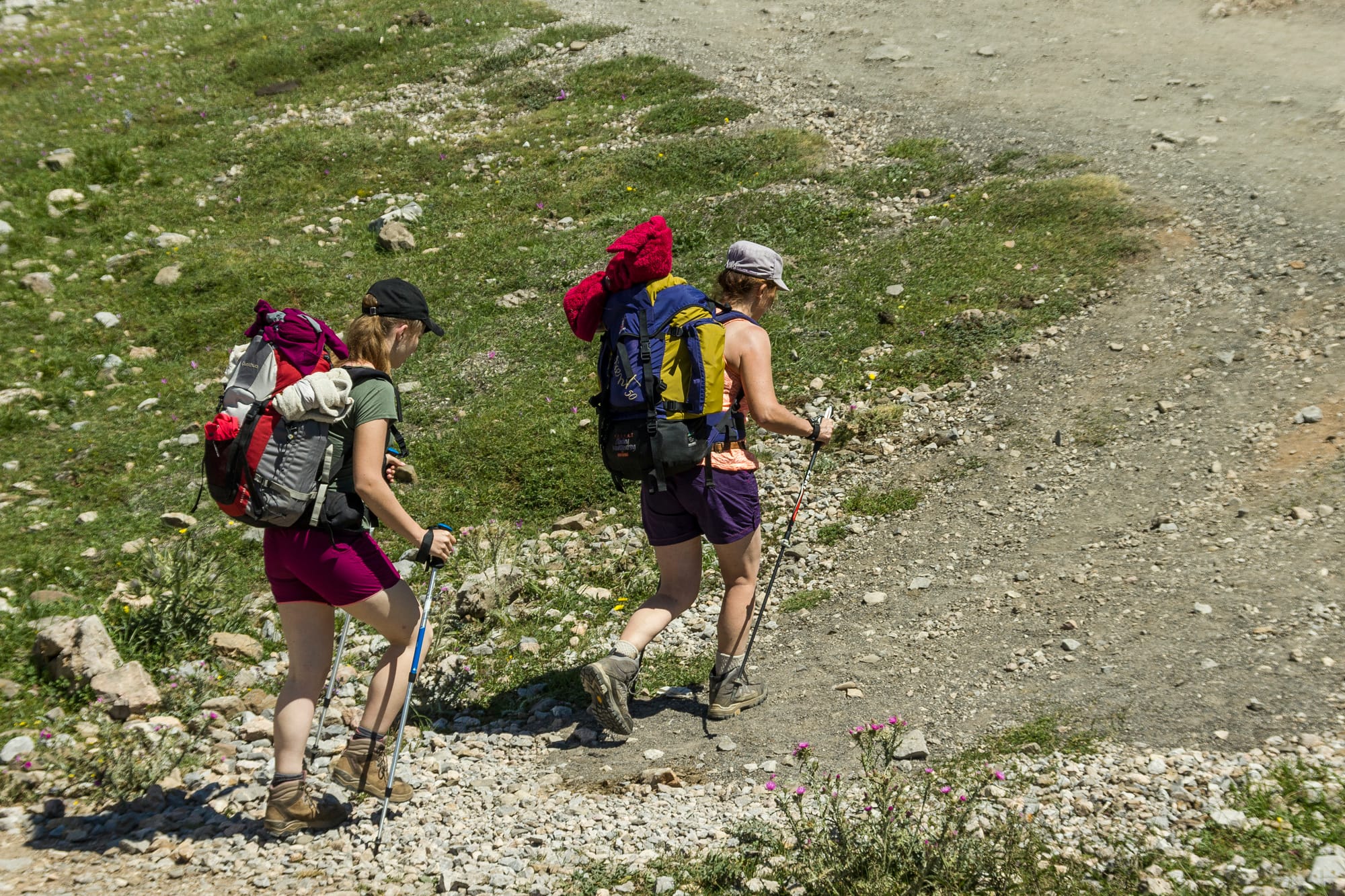
One of the most memorable and scenic stretches of the entire route. The day begins with a steady climb to Cruz de Ferro, the highest point of the Camino Francés, where pilgrims traditionally leave a small stone as a symbolic gesture. From there, the path continues across mountain landscapes before descending steeply toward the Bierzo region. The long downhill section requires care, but the reward is the beautiful village of Molinaseca, known for its charming streets and Roman bridge over the Meruelo River — a perfect place to rest after a demanding day.
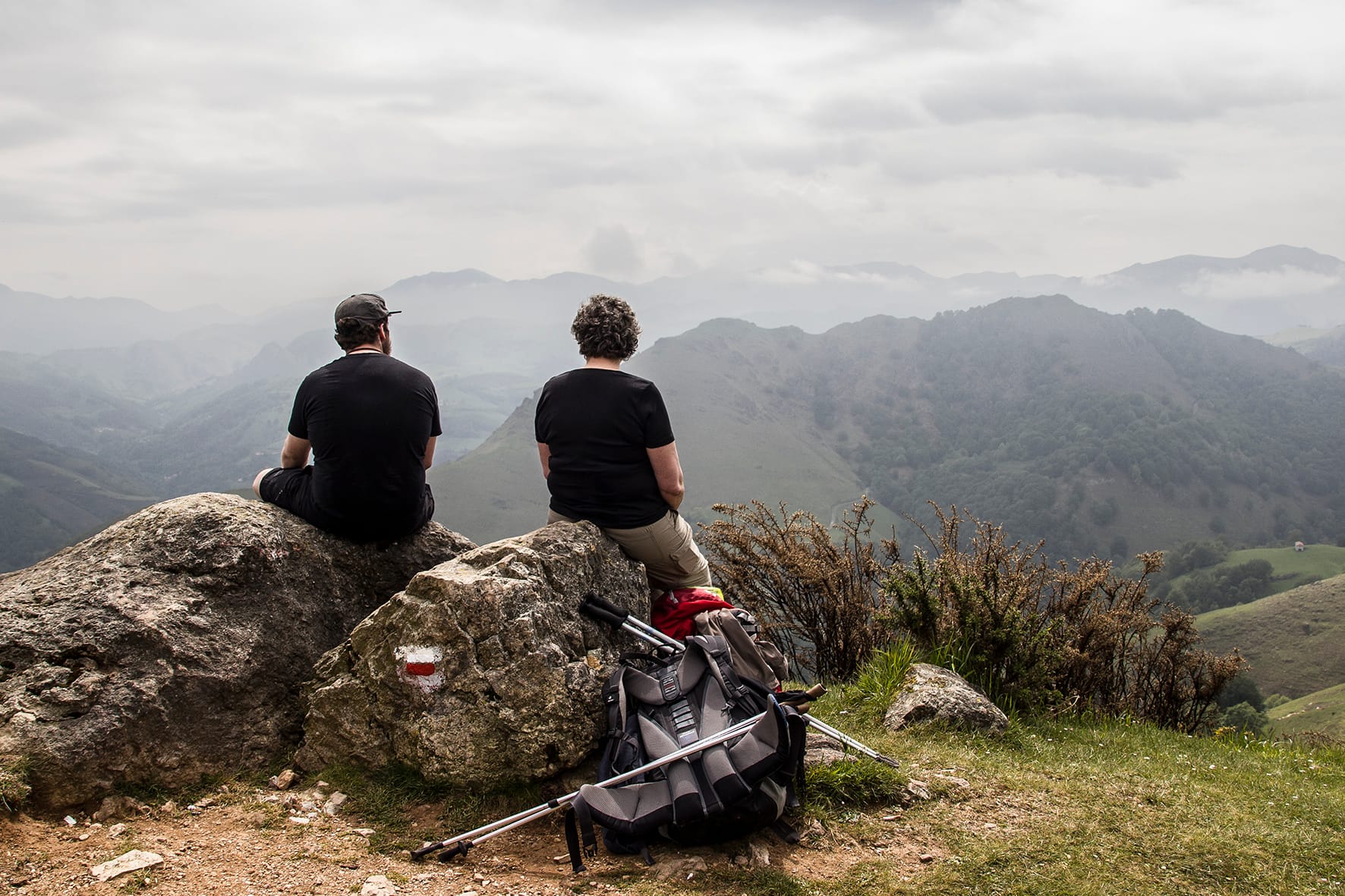
The route is mostly downhill, passing small villages and beautiful natural surroundings. Villafranca del Bierzo, often called the "Little Compostela," is a lively historic town with medieval streets, churches, and all services for pilgrims. It provides a welcoming place to rest and enjoy the local gastronomy before continuing toward the mountains of Galicia.
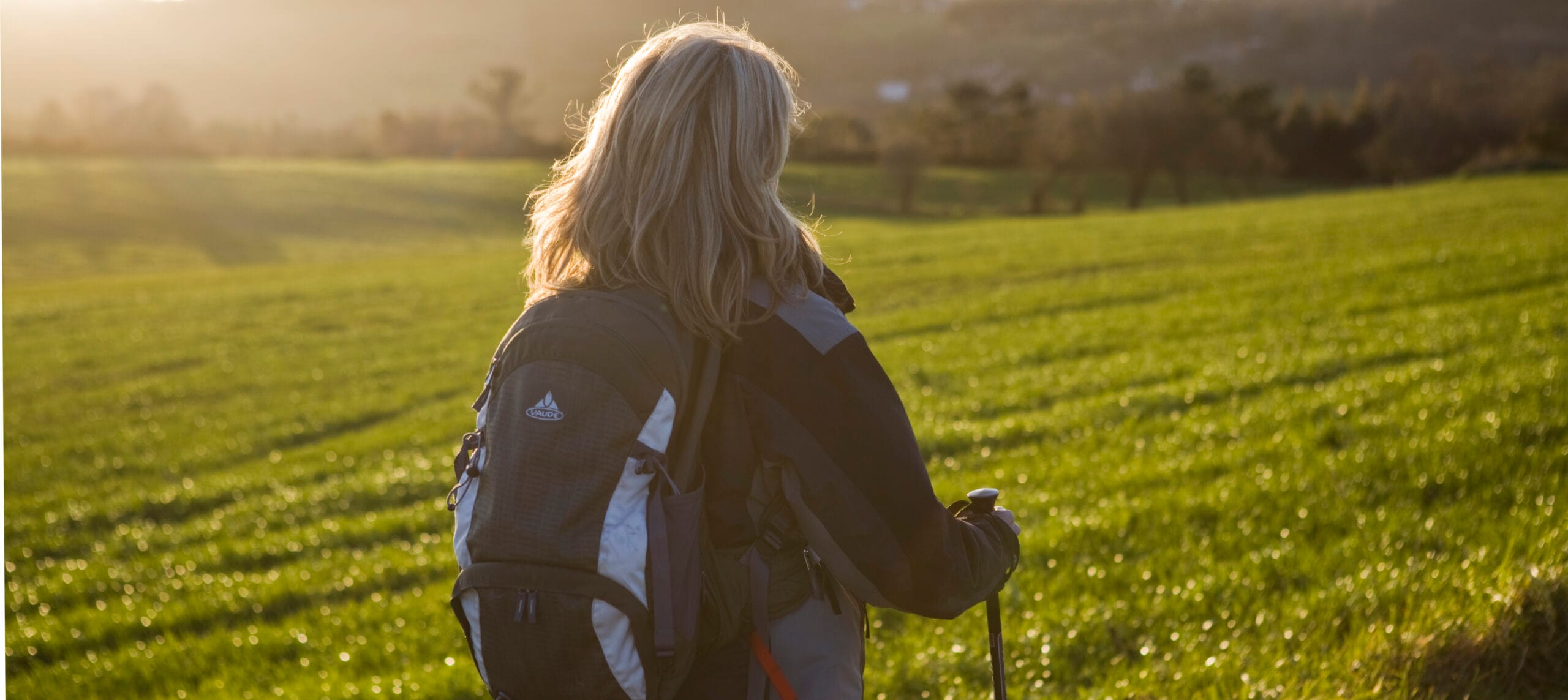
After leaving Villafranca, the path begins a steady climb through the Galician hills, gradually entering the mountainous landscapes of O Cebreiro. The terrain is steep in places, with winding paths and stunning panoramic views. O Cebreiro, a picturesque village known for its traditional pallozas (thatched stone houses) and rich pilgrim history, offers a rewarding stop with basic services — the perfect place to rest after a demanding day.
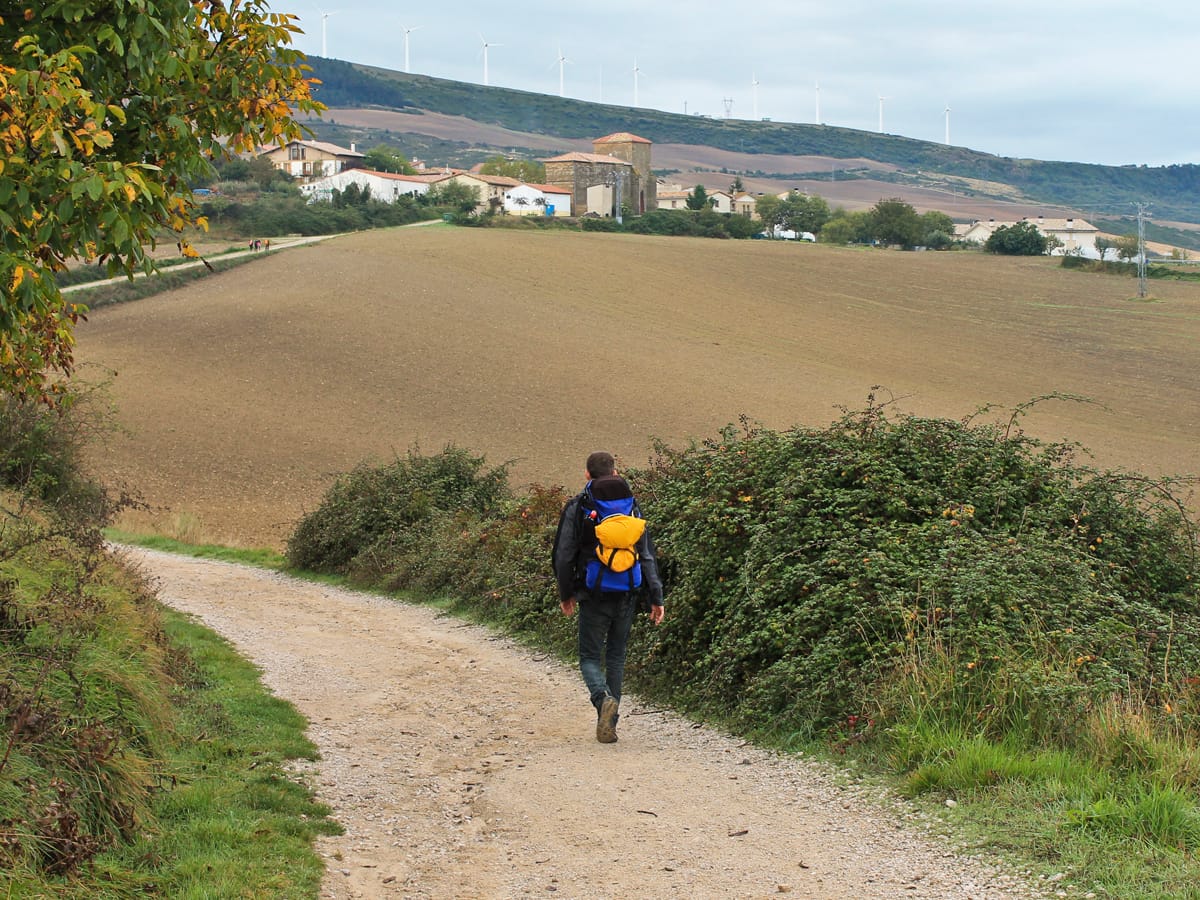
O Cebreiro is approximately 150 kilometres from Santiago de Compostela, making it a crucial milestone for many pilgrims. From here, the journey continues through picturesque landscapes, charming villages, and historic sites on the way to Triacastela.
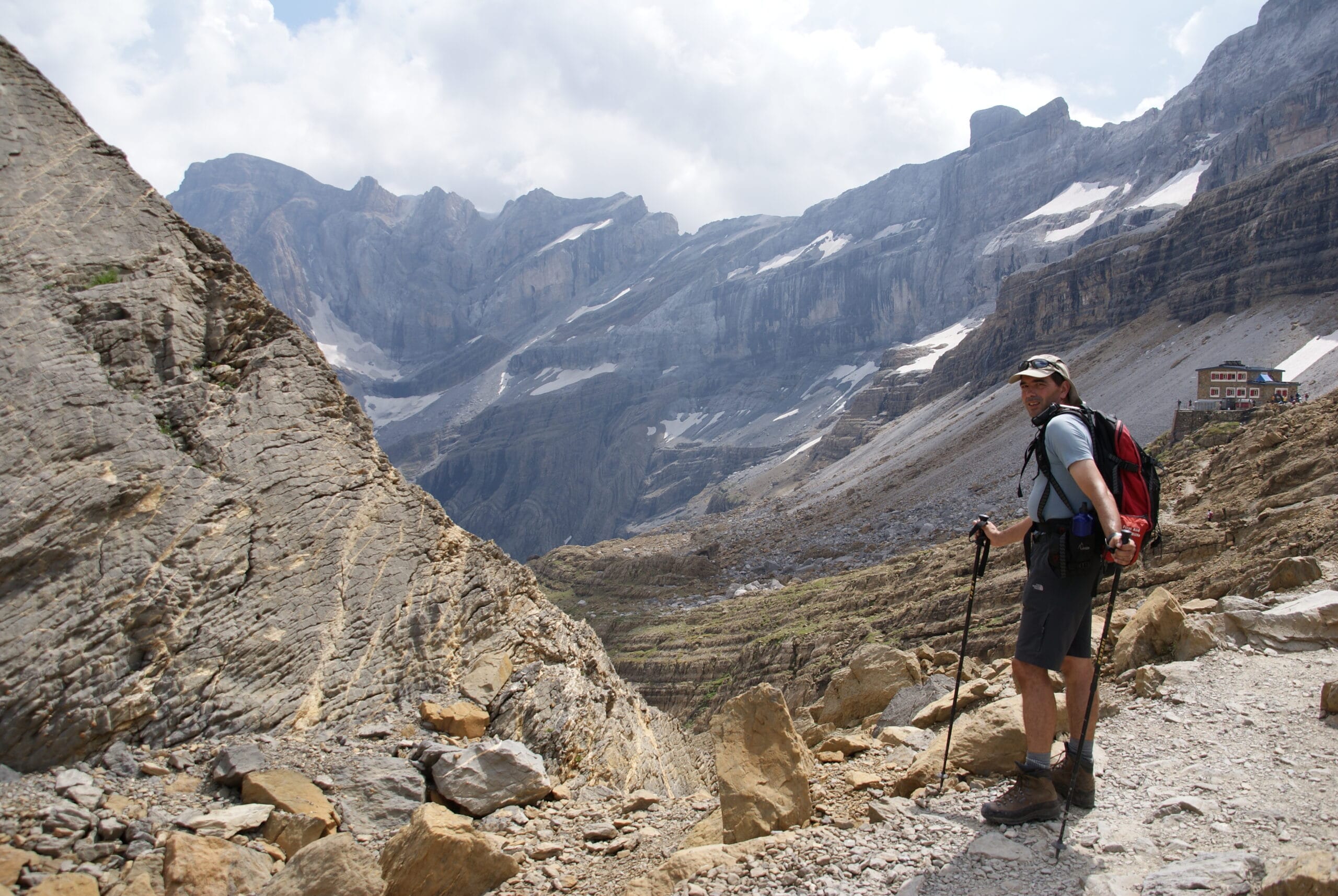
From Triacastela to Sarria, the route follows a pleasant path through Galicia's quiet countryside, passing small forests, streams, and gentle valleys. Sarria is the main starting point for most pilgrims on the French Way, as walking at least 100 km is required to receive the Compostela certificate.
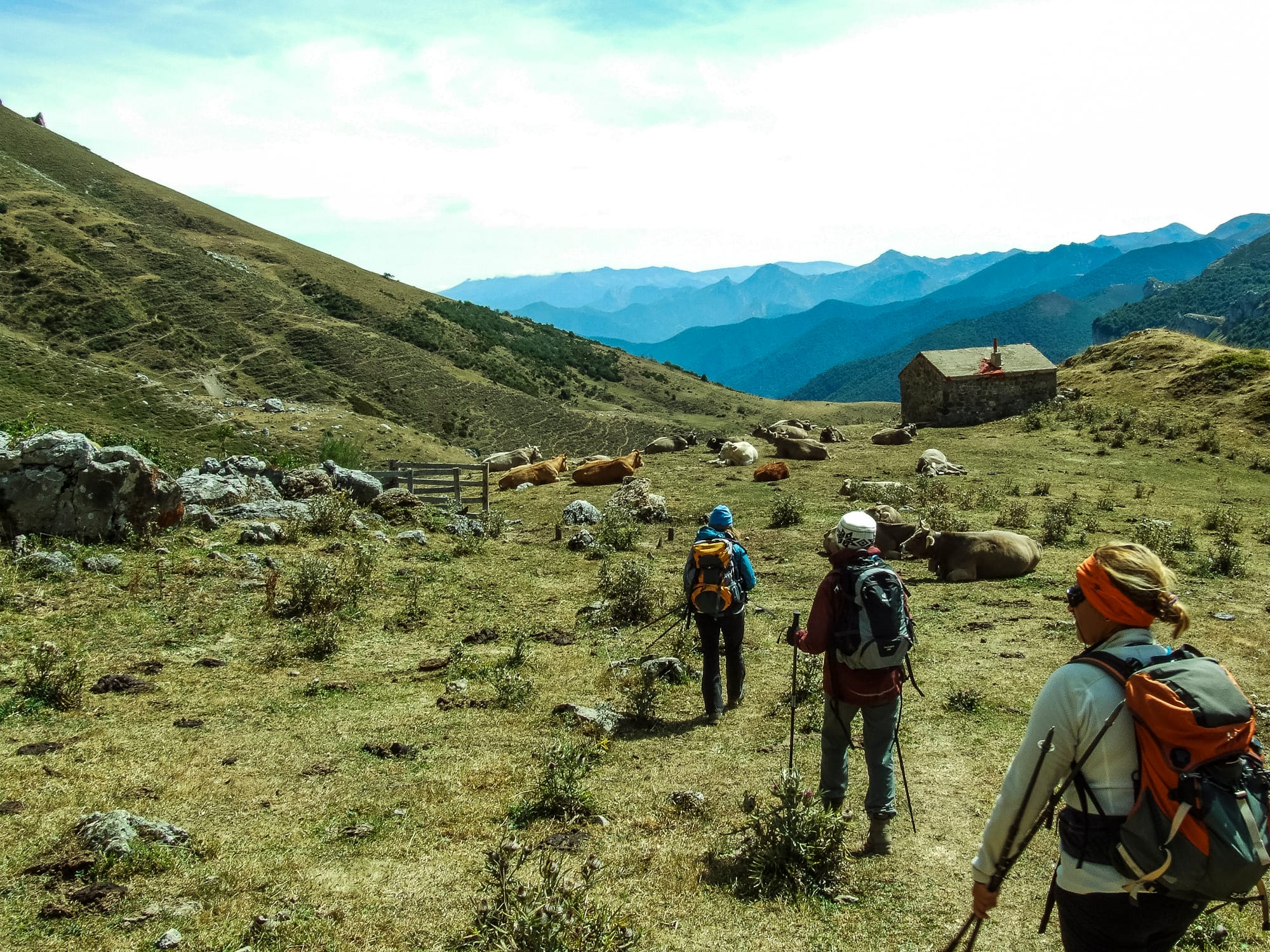
Starting from your accommodation in Sarria, you will set off refreshed and ready for the day's walk toward Portomarín. Along the way, be sure to make regular stops at places like the Santiago de Barbadelo Church, beautifully decorated with scallop shells. After passing through stunning landscapes and villages such as Ferreiros, you will arrive at Portomarín, where highlights include the Escalinata, the Das Neves Chapel at the village entrance, and the impressive San Nicolás Church.
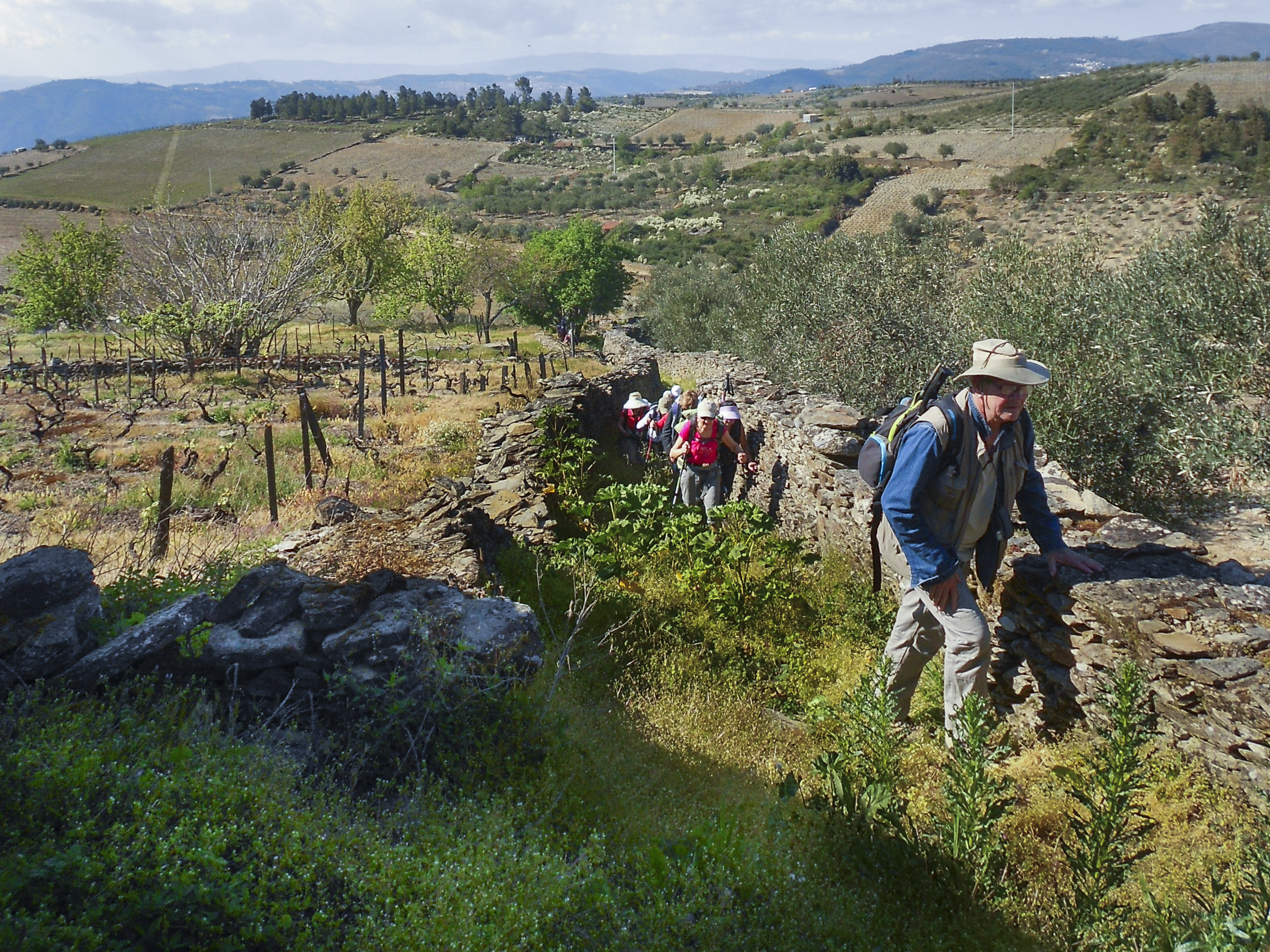
Though today's walk is on the longer side, it is a pleasant amble through farming regions, sunflower fields, and a number of inviting picnic areas. Along the way, you will encounter Castro de Castromaior just off the main route, as well as St. María de Castromaior Church and Vilar de Donas Church, recognised as a site of Cultural Interest since 1931. After arriving at Palas de Rei, you could visit some local interesting spots, including the outstanding Pambre Castle, located just a few minutes off the Camino.
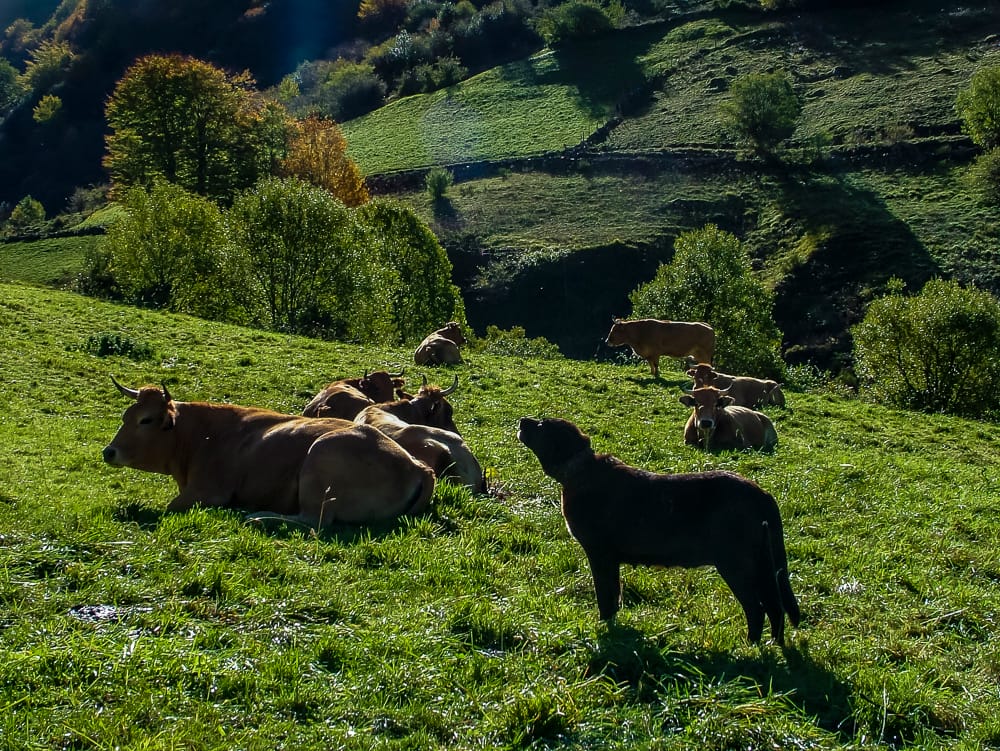
The longest stage of the final 100 km of the Camino Francés, so many pilgrims choose to break it into two days, staying overnight in Melide. Melide is famous for its delicious octopus, which is highly recommended if you pass through. Just before reaching Arzúa, the route takes you through Ribadiso — a charming spot with a river, trees, and traditional houses that feels like walking through a picture-perfect postcard.
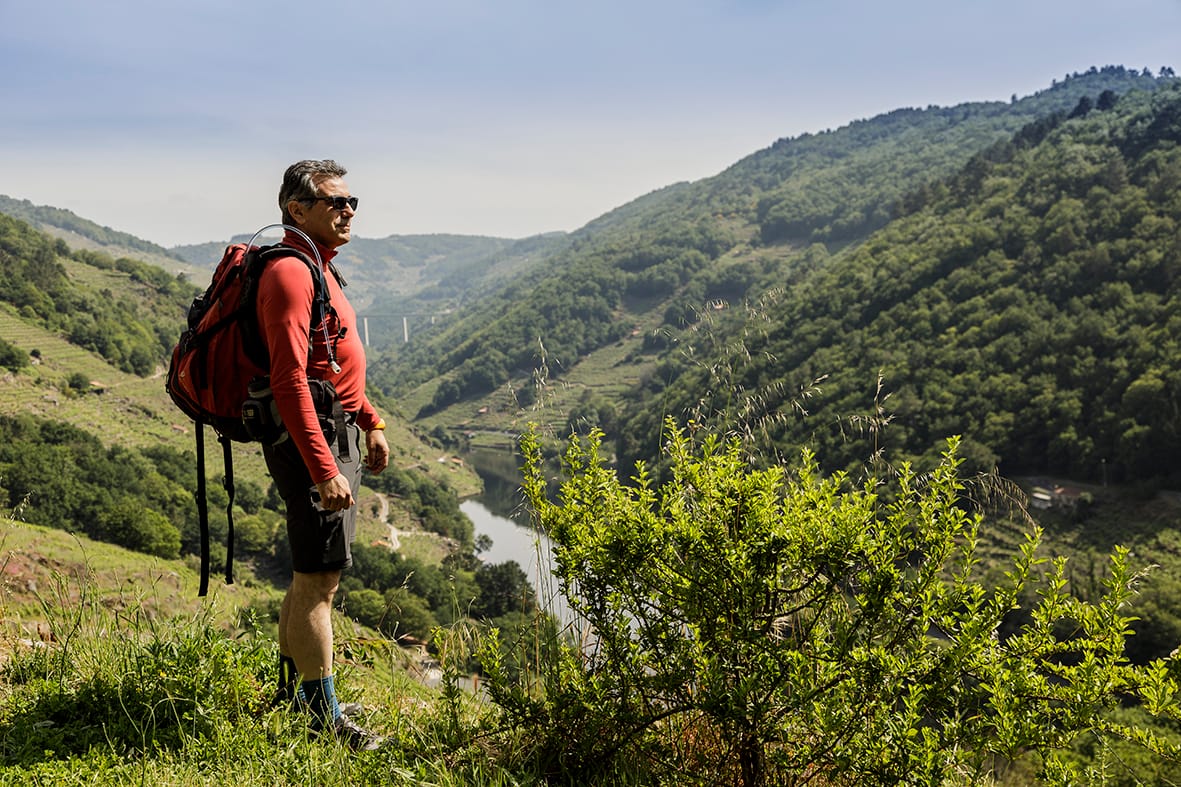
The route passes through small villages, farmland, and wooded areas, offering a calm and scenic experience. O Pedrouzo is a small village with all the necessary services for pilgrims, making it a convenient and comfortable stop before the final stage to Santiago de Compostela.
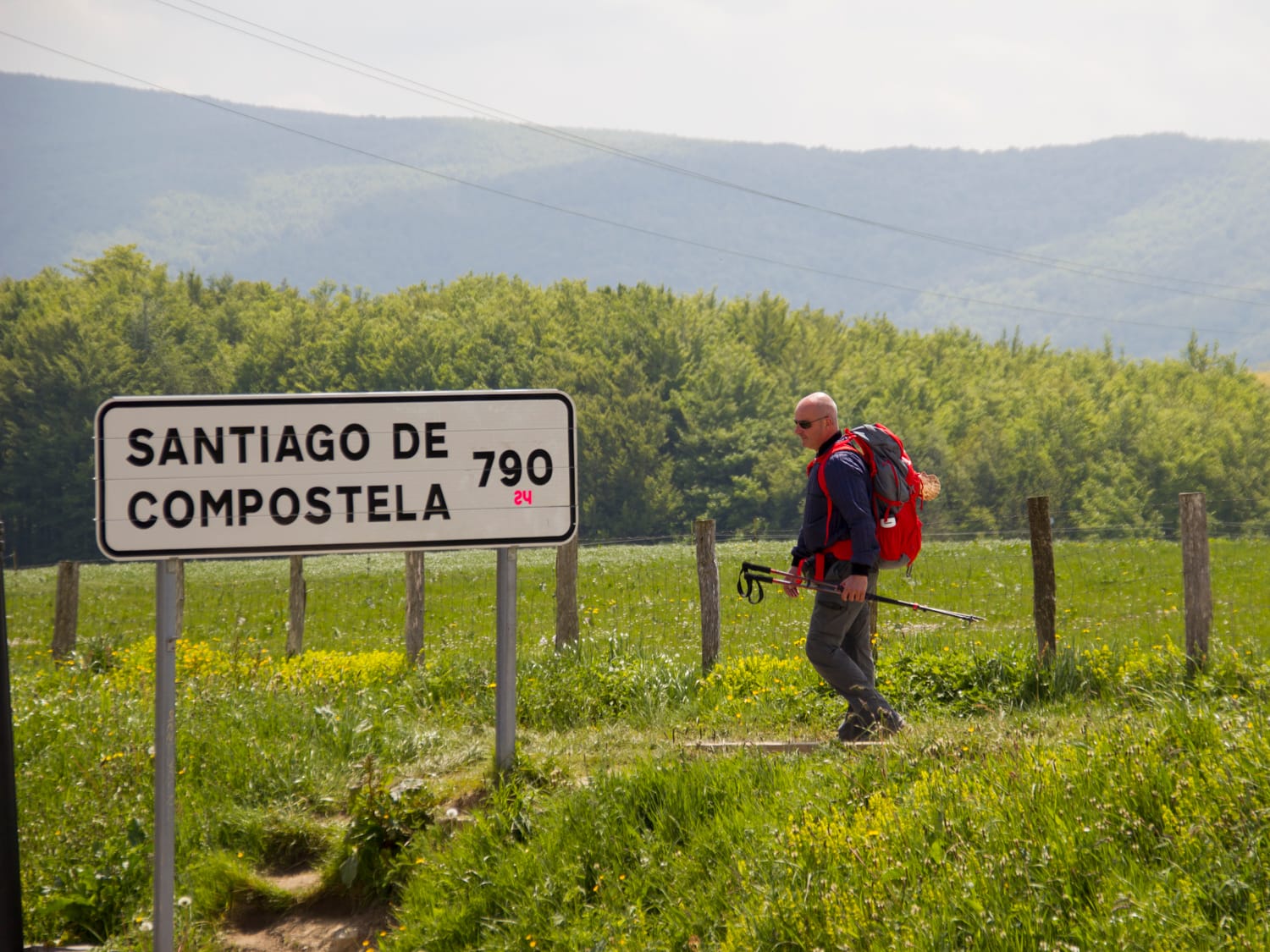
The final stage of the Camino Francés is a gentle and rewarding walk through the Galician countryside. Pilgrims follow quiet paths, forests, and small villages as they approach their destination. Arriving in Santiago de Compostela, you are greeted by the impressive cathedral — the heart of the pilgrimage. This moment marks the completion of the journey and is a time to celebrate your achievement and soak in the historic and spiritual atmosphere of the city.
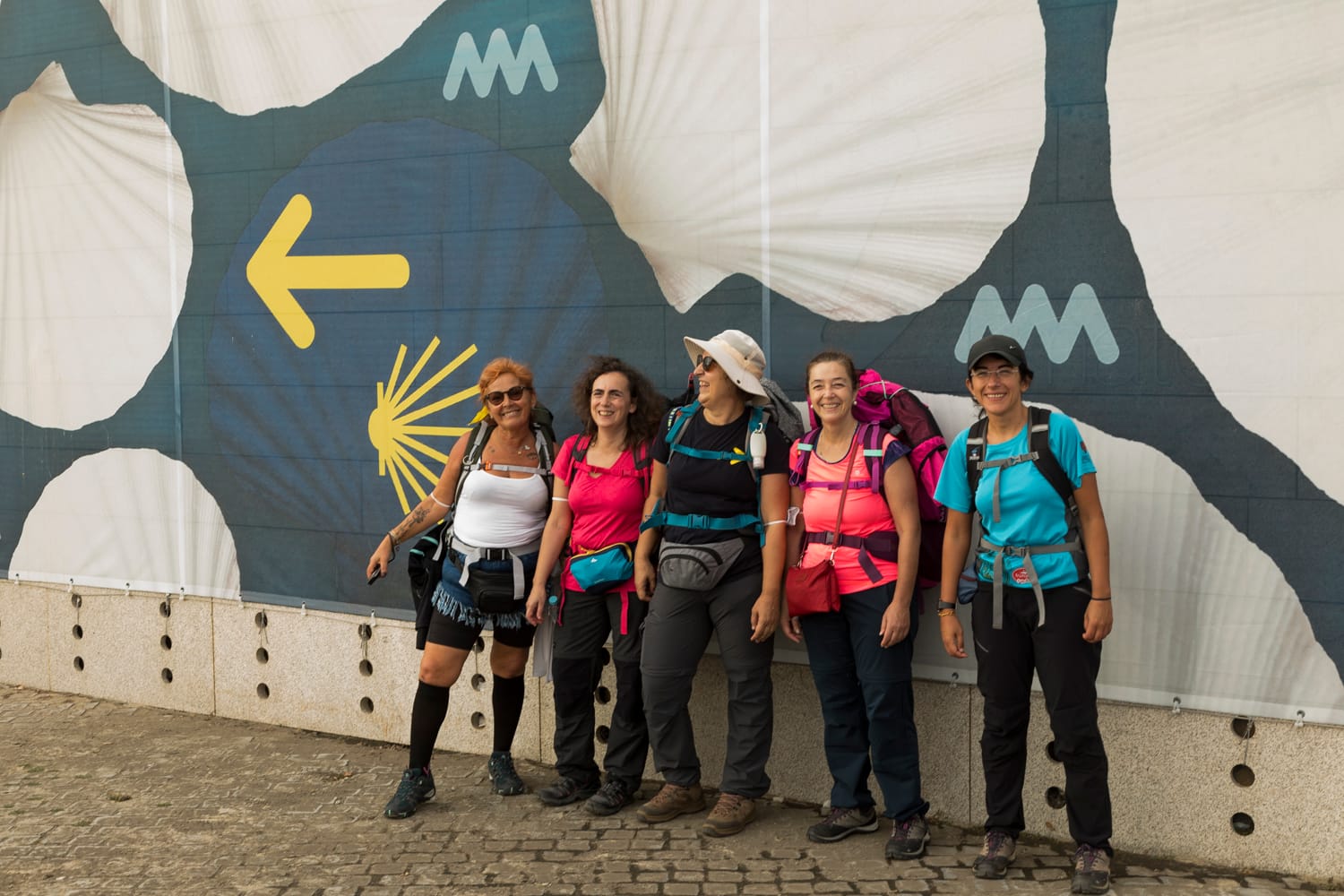
After breakfast, you are free to check out of your hotel any time before 11:00 am. If you would like to explore Santiago further, you are welcome to leave your bags with reception.

Every week we receive messages from people over 60 asking...
Read more
Walking the Camino de Santiago with children isn’t just possible,...
Read more
Do you want to experience the Camino de Santiago but...
Read more